
Returns and complaints when selling dry fruits and nuts online and how to reduce them
Freshness and weight disputes are the usual trouble for dry fruit sellers, and clear listings, honest weights and batch details can prevent most of them.
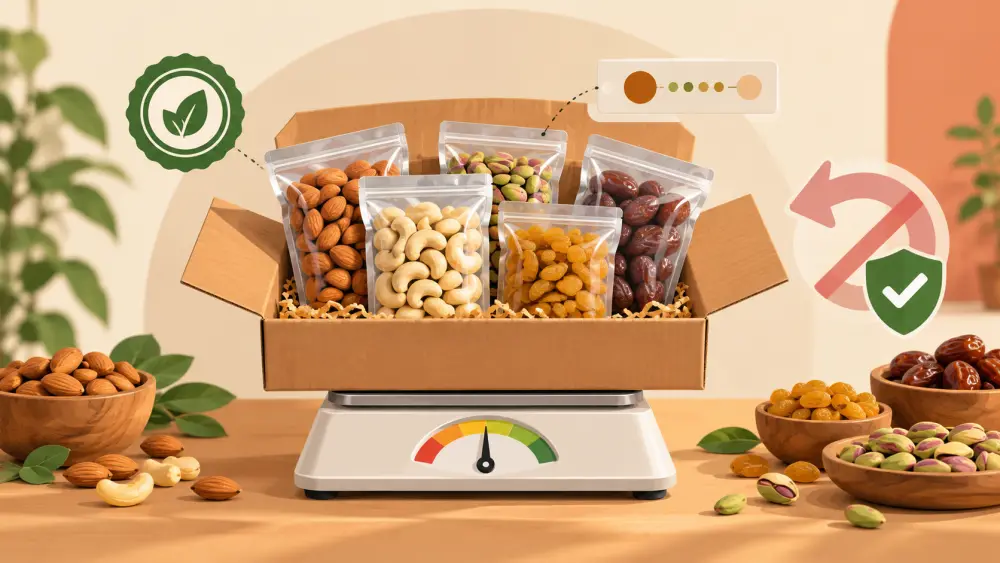
Food is one of the most personal things a customer buys. If a pack of almonds tastes stale or seems light, the buyer feels it directly, and food is usually not something you can take back and resell. That makes prevention far more valuable than any return policy. Here is how a small dry fruit seller can reduce disputes before they begin.
The two big areas of complaint
Most disputes for dry fruits and nuts fall into two groups: freshness and weight. A few others sit on the edges, like size grading, broken pieces, taste and packing damage.
Freshness complaints sound like "it tastes old", "it smells strange" or "it is soft". Weight complaints sound like "the pack looks smaller than expected" or "the weight is less than I paid for". Both are emotional because the buyer is paying for food they will give to family or guests.
Be careful about freshness claims
Do not write words like "fresh", "premium" or "farm-fresh" unless you can back them up. Instead, state facts you control:
- When the pack was sealed or packed
- How it is stored before dispatch
- The recommended way to store it after opening
- Any best-before or use-by information, following the labelling rules that apply to you
Confirm the labelling rules with a qualified person or the relevant authority, as requirements vary by product and change over time. Our post on avoiding exaggerated claims in product descriptions explains why plain, factual words protect you.
Explain weight clearly
A buyer thinking of 500 grams may not realise that the packing material is not included in that figure. State the net weight of the food and say whether it includes packaging. If you sell by count, such as pieces of dates or figs, say that counts can differ slightly. If you use a scale, weigh each pack and keep your scale checked. Underfilling by habit, even slightly, is a trust problem and may be a legal one.
Describe the grade and cut honestly
Say whether items are whole, halved, split or in pieces. If natural size varies, tell the buyer. A buyer who expected uniform large almonds and received mixed sizes will feel misled, even if the quality is fine. A short sentence in the description can fix this, and a close-up photo of real product from the batch helps too. For a shot plan, read how to photograph dry fruits and nuts for your online store.
Pack to protect
Crushed or broken contents and torn pouches create fair complaints. Use sealed pouches, a rigid inner box for delicate items, and cushioning in the shipping carton. See packing dry fruits and nuts for courier safely.
Set up a simple complaint process
Decide in advance what you will ask for when someone complains about food. A clear photo of the pack and the label, along with a photo of the contents, is usually enough. Ask for it within a few days of delivery. Then offer a fair response: a replacement or a refund, depending on the situation. Keep your tone kind and avoid arguing about taste, since it is subjective. Rules for food returns and consumer rights differ, so confirm them with an expert and write your own policy in plain words. You may find cancellations, refunds and restocking useful when thinking about this.
Keep batch records
Write down the batch or packing date on each pack and in a notebook. If several buyers report the same problem, you can trace which batch it came from and stop selling it. This habit is especially useful if you buy in bulk from a supplier.
Learn from patterns
Read each complaint as information. If people keep saying a product tastes stale, check storage and turnover. If they say packs feel light, check your scale. A listing and a process that answer these before the order is placed will save you far more than any return policy.