
How to pack dry fruits and nuts so they reach the customer safely
Protect freshness and shape by using sealed pouches inside rigid boxes, with cushioning, labelling and a quick shake test before every parcel leaves.
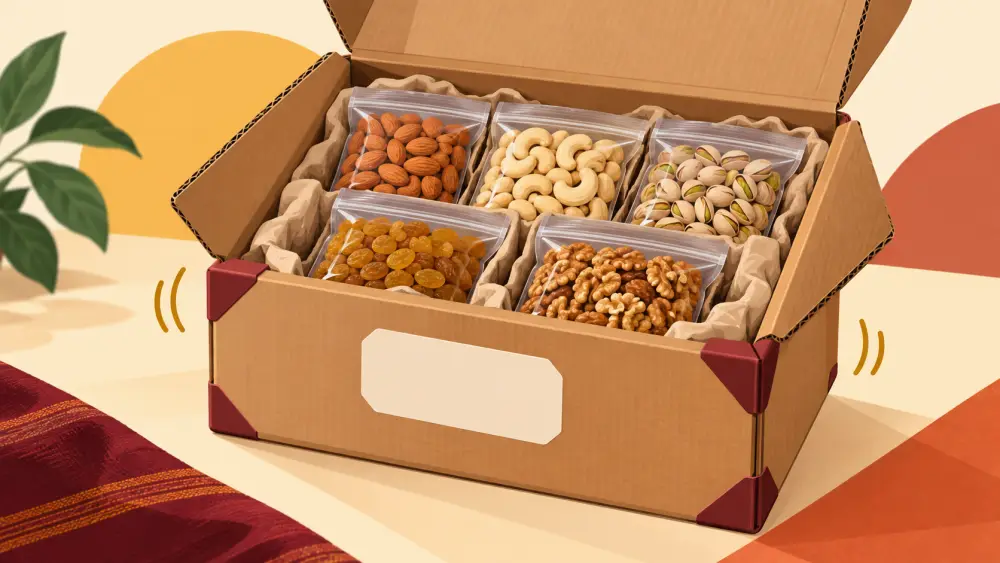
Dry fruits and nuts are not fragile in the way glass is, but they have two enemies in transit: air and pressure. Air and moisture affect freshness, and crushing squashes soft fruits and breaks delicate nuts. A good pack handles both. Here is a simple method for a home or small-batch seller.
Start with the inner pack
The first layer is whatever touches the food. For dry fruits and nuts, sealed pouches are a common choice, and your supplier or packaging vendor can tell you which pouch types suit your products. A few points worth checking:
- The seal should be complete and even along the whole edge.
- A zip lock along the top lets the buyer reseal the pack after opening.
- Press out extra air gently before sealing, but do not squash the contents.
- Clean the outside of the pouch if oil or crumbs have touched it.
If your items are oily, such as some nuts and dates, check that the pouch does not leak or stain. Do a small test by leaving a sealed pouch on paper for a day and looking for marks.
Label the pouch properly
Write or print the product name, weight and batch or packing date on the pouch itself. Check the labelling rules for food products with a qualified person or the relevant authority, since requirements change and depend on what you sell. Our post on how to start selling snacks online in India covers the general picture.
Add a rigid outer layer for delicate items
Soft pouches can be crushed when parcels are stacked. For softer or more delicate items such as flaky or fragile pieces, put the pouch inside a small rigid box, such as a cardboard carton, a tin or a sturdy paper box, before it goes into the shipping carton. The rigid box takes the squeezing so the pouch does not. This extra step is especially useful for gift packs.
Fill the empty space
Place the box or pouch in a corrugated carton and fill the gaps with crumpled paper or air pillows. Nothing should move when you shake the box lightly. A loose pouch slides and can burst at the seal. Avoid putting dry fruits next to strong-smelling products in the same parcel, since nuts can absorb odours. See packing spices for courier safely for related thinking on smelly products.
Keep it dry
Moisture is the biggest risk for freshness. Pack on a dry day if you can, with dry hands and a dry table. Keep cartons off the floor and away from the kitchen steam. If you use food-safe desiccant sachets, make sure they are clearly marked and not mistaken for food. Check with your supplier if you are unsure what is appropriate.
Seal and label the outside
Use strong tape on all seams. Mark the carton "Food items, keep dry" and "This side up". Stick the shipping label flat on a smooth area and not across a tape seam where it can peel. Put a copy of the order details inside the parcel.
Think about weight and size
Weigh the closed parcel and enter the real weight when booking the courier. Do not guess. If your parcels are often heavy, choose a stronger carton. For lighter packs, a padded mailer can work but only if the inner box protects the contents. Read shipping across India: what small brands should know for more on booking and weights.
Do a drop test
Before you ship a new pack design, drop a sample from waist height onto the floor, open it and check the contents. If seals are intact and nothing is crushed, your method works. If not, add more cushioning or a firmer inner box and try again.
Include a freshness tip
A small card that says how to store the product, such as in a cool, dry place and in a closed container after opening, helps the buyer and shows care. Keep the advice general and consistent with your supplier's guidance.