
Courier selection criteria for fragile or high-value orders
For glass, ceramics, decor and valuable pieces, ask about handling practices, damage claims and proof requirements before you trust a courier with the parcel.
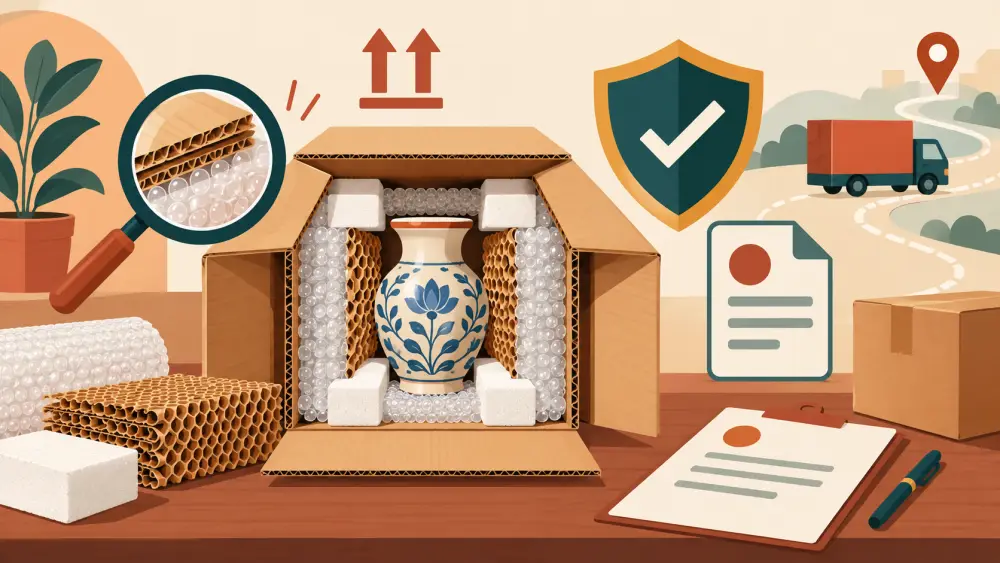
Shipping a soft cotton dupatta and shipping a ceramic vase are very different jobs. When a parcel is fragile or valuable, the courier you pick can decide whether it arrives whole. You cannot control everything, but you can ask the right questions and prepare so that your risk is lower.
Know what you are protecting
Be specific about what makes your parcel special. Is it breakable, like glass, terracotta or resin? Is it valuable, like silver, a handmade saree or a limited piece? Does it have a delivery date that matters, like a gift? The more clearly you can describe it, the better the courier can tell you what they can and cannot handle.
Questions about handling
Ask these in plain words and write down the answers.
- How are fragile parcels treated differently from normal ones, if at all?
- Do you accept parcels marked fragile, and what does that marking actually change in practice?
- Are there any items you do not carry, such as liquids, glass or certain materials?
- Is there advice on packaging that you expect from sellers?
Do not accept a vague answer as a promise. A courier can tell you their process, but no one can guarantee a parcel will never be dropped. Treat answers as information, not assurance.
Questions about claims
Claims are where many sellers get caught. Ask before you ship, not after the damage.
- What counts as a valid claim, damage, loss, or both?
- How long after delivery or the expected date can you raise one?
- What proof is needed, such as photos of the outer box, the damaged item, and your packing?
- How is the amount decided, and does it depend on invoice value or declared value?
- How long does the process usually take, and who do you talk to?
Understanding the claim process in advance also tells you whether you should add your own protection, such as declaring the correct value or keeping detailed evidence.
Questions about value and insurance
For higher-value orders, ask whether declaring the item's value changes how the parcel is treated or compensated. Ask whether there is an optional cover and what it includes and excludes. Read the terms rather than relying on a phone conversation, and keep a copy.
Your packing is part of the answer
A courier will not rescue weak packing. Use a sturdy outer box, firm cushioning that stops movement, and a snug fit so the item cannot slide. For product-specific ideas, see packing terracotta for courier safely and packing resin art for courier safely. Photograph the item before sealing, and the sealed parcel too. Those photos are what a claim will lean on.
Test before committing
Send a few lower-risk parcels first, or an inexpensive replica, and see how they arrive. Ask a friend or relative to receive one and report on condition and timing. This costs a little but tells you far more than a brochure.
Weigh the real cost of damage
Think about what a damaged order costs you, including the refund, the reshipment and the lost trust. The numbers are laid out in the cost of a damaged-in-transit parcel. That context makes it easier to justify better packing or a more careful choice of courier.
Fragile shipping is not about finding the one perfect courier. It is about asking sharp questions, packing well, documenting everything and being ready to handle the occasional damaged parcel with a quick replacement.