
How to pack terracotta pieces so they reach the customer safely
Practical packing steps for terracotta sellers, aimed at stopping cracks and chips on arrival with wrap, cushioning and a sturdy outer box.
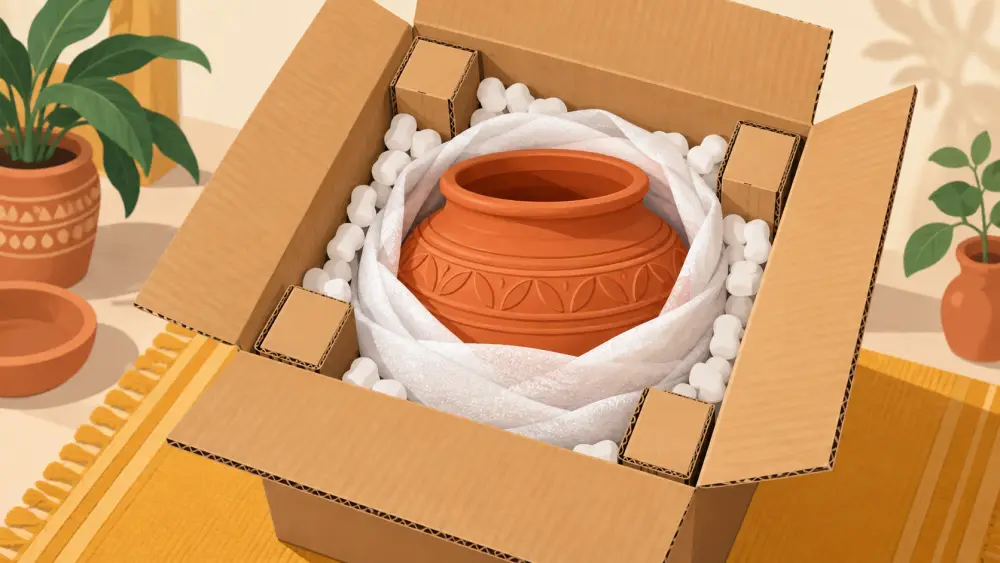
Fired clay is strong when it sits still and brittle when it is hit. Rims chip, thin walls crack and handles snap, and the break is often invisible until the customer unwraps the piece. The aim of packing is simple: stop the pieces touching each other, stop them touching the box wall, and keep them from moving.
Inspect before packing
Run a finger around rims and tap the piece gently. A clear ring usually suggests a sound pot; a dull sound can mean a hairline crack. Do not ship pieces you doubt. A single cracked pot costs you more in lost trust than the pot is worth. Make sure the piece is completely dry, particularly after rain, so it does not stain the wrap.
Wrap every piece on its own
- Start with a soft layer such as tissue or paper to protect the surface from scratches.
- Add bubble wrap, foam or cardboard sleeves, with extra turns at rims, handles and spouts, because those are the weak points.
- Secure with tape that sticks to the wrap, not directly on unglazed clay, as tape can lift the surface.
For planters, fill the inside with crumpled paper so the walls are supported from within, and leave the drainage hole free of wrap that could be pressed in.
Never let pieces touch
Pots nesting in each other look efficient but risk chipping where the rims meet. If you must stack, put a thick layer of cushioning between each piece. Better still, pack each in its own compartment. Cardboard dividers cut from a spare carton work well and cost almost nothing.
Choose a strong outer box
Use a corrugated box with at least a few centimetres of cushioning on all sides, including the bottom and top. Double-wall boxes are more forgiving for heavier pieces. A pot that touches the wall transfers every knock straight to the clay. Fill gaps with paper or air pillows until a gentle shake produces no movement or sound.
Heavy pieces need extra care
Larger planters can crack under their own weight. Support them from underneath with a thick base of cushioning, and avoid stacking boxes on them. Mark the outer box with an arrow for the upright side. Handle with care stickers are helpful but not a guarantee.
Fragile goods and couriers
Choose courier options and pickup times thoughtfully, and tell the customer the typical delivery window you receive rather than a promise. Our article on shipping across India helps you think about distance and handling. Packing resin art has overlapping steps if you sell both types of products.
Photograph before sealing
A quick photograph of the packed contents shows how you wrapped the piece. If a customer reports a break, you can examine whether the packing or the transit was at fault, and adapt. Ask the customer to send photos of the broken piece and the box interior, and keep the packaging until you have settled the matter. Cancellations, refunds and restocking explains how to handle the outcome.
A small card for the customer
Add a note that says how to unpack carefully, how to care for the clay, and what to do if something arrives damaged. A line like "please open the box on arrival and message us with photos the same day" sets a clear process.
Checklist
- Piece inspected and dry.
- Individually wrapped with extra turns at rims.
- Inside supported for planters.
- Pieces kept apart by dividers.
- Outer box with cushioning and no shake.
- Photo taken.
Pack terracotta as if it will be dropped once, and you will rarely need to apologise.