
Catalogue spreadsheet columns every small seller needs
The columns worth keeping in your product planning sheet, and why each one earns its place.
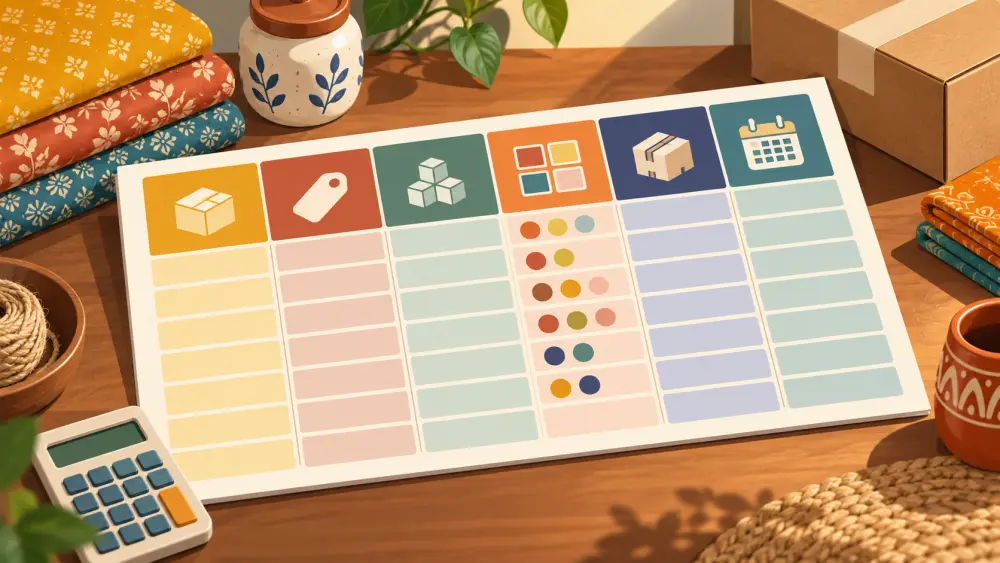
A catalogue spreadsheet does not need to be fancy. It needs the right columns, filled in the same way every time. Here is a practical set for a small seller, with the reason behind each.
Note that this is a planning sheet for your own use. You will still enter products in your store admin yourself, copying from the sheet.
Identity columns
- SKU: a short internal code you invent, such as KRT-BLU-M for a blue medium kurta. It lets you find a piece in a pile of stock in seconds.
- Title: the exact name customers will see. Decide the style once, for example "Material + product type + colour".
- Category: where the product lives in your store. See organising products into categories.
Money columns
- Cost price: what one unit costs you, including packaging if you can allocate it.
- Selling price: the price shown to customers.
- Margin: selling price minus cost. A formula in this column makes underpriced items stand out immediately. If pricing is your sticking point, read pricing your products when you are just starting.
Variant and stock columns
- Colour and Size: one row per combination, so each has its own line.
- Quantity in hand: counted, not remembered. This is the figure you update after each batch or physical count. The thinking behind it is in stock per variant.
Physical columns
- Weight (packed): in grams, measured with the packaging on.
- Length, breadth, height (packed): in centimetres.
You will want these when you arrange shipping, and having them in one place saves measuring again later.
Content columns
- Photo filename: the exact file name of the main image, so nobody has to guess which photo belongs to which row.
- Short description: two or three lines, written once and reused.
- Material and care: kept as separate fields so you can paste them in the same order every time.
Housekeeping columns
- Status: Draft, Ready, Live. It helps when you are launching in stages.
- Date added: useful later when you review what sells and what sits.
- Notes: reorder lead time, supplier name, anything you will otherwise forget.
Keep it consistent
The spreadsheet only helps if every row follows the same pattern. Decide units once (grams, centimetres), decide capitalisation once, and do not mix formats in a column. More on that in keeping product data consistent.
If you later want order data back out of your store for analysis, see exporting store orders to a spreadsheet. The catalogue sheet is the other half of that picture: the plan you start from, kept alongside the orders that follow.