
Returns and complaints when selling brass and pooja items online and how to reduce them
Finish differences and tarnish worries cause most brass disputes, and a clearer listing, honest photos and a care note can head them off before the order ships.
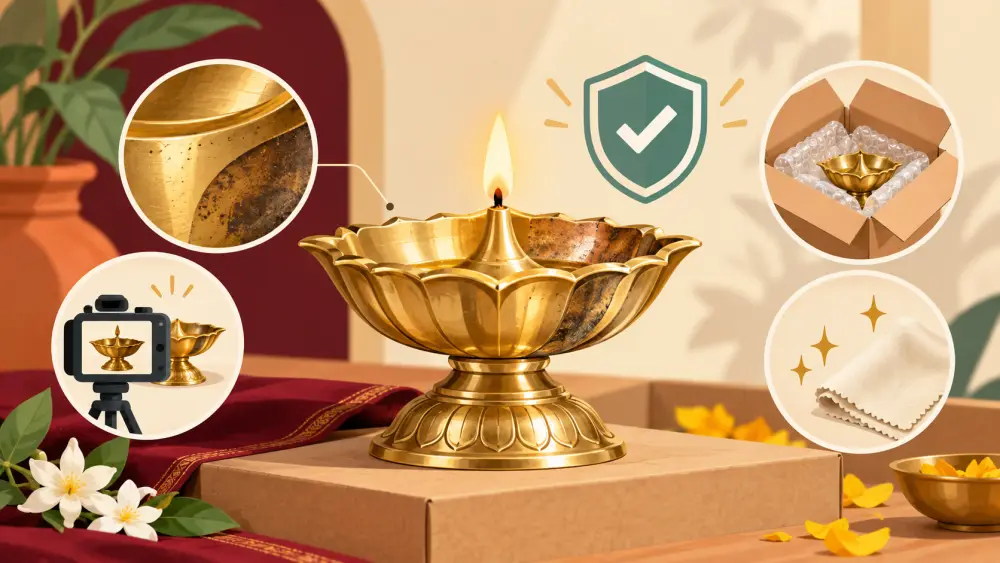
Brass is a living metal. It darkens, it takes on a patina, it reflects light differently in different rooms. A buyer who expects a mirror shine and receives a warm, softer glow may think the item is wrong, even if it is exactly what you made. That gap between expectation and reality is where most brass complaints begin. Here is how to close it.
The complaints you are likely to hear
Brass and pooja sellers usually deal with a few repeating themes:
- The colour is more yellow, more orange or duller than the photo
- The surface has marks, spots or dark patches
- The item has turned darker after a few weeks
- The finish looks different from another piece the buyer owns
- The weight or size feels different from what they pictured
- Small dents or scratches from transit
Some of these are about the product, some about packing, and some are just natural behaviour of the metal. Your job is to separate them in advance, in the listing.
Name the finish clearly
Tell the buyer which finish the piece has. Is it high polish, matte, antique, hand-hammered, lacquered or left raw? Use plain words and show a photo of exactly that finish. A polished lamp and an antique-finish lamp look quite different, and calling both "brass lamp" invites disagreement. If you are not sure how to describe it, read photographing brass lamps for your online store.
Be honest about hand-finished variation
Handmade brass items differ slightly from piece to piece. If yours do, say so. A sentence such as "Each piece is hand-finished, so small variation in tone and tool marks is normal" sets the right expectation and presents the variation as part of the craft. Do not use this sentence to excuse real defects, though. Dents and deep scratches are not variation.
Explain tarnish before it happens
Many buyers do not know that brass darkens with air, moisture, oils from hands and time. Tell them in the listing and again in a small care card inside the parcel. Cover the basics:
- Wipe with a soft dry cloth after use
- Keep away from damp places
- Clean with a method that suits the finish, and say which one
- Avoid harsh cleaners if the item is lacquered
Check each instruction with your craftsperson or supplier, since the right method depends on how the piece was made. For the general habit of writing these notes, see how to write care instructions for your products.
Use photos that match the real piece
Shoot in daylight and avoid heavy filters. Brass picks up the colour of whatever surrounds it, so a warm background can make it look more orange than it is. Include a close-up of the surface so buyers can see the grain and polish. If you offer more than one finish, photograph each one separately with a label.
Give accurate size and weight
Write height, width, base size and weight. Brass is heavy for its size, and buyers who are surprised by the weight sometimes feel something is off. Specific numbers avoid that. See how to write a product weight and dimensions section.
Pack it well
A dent from transit is a fair complaint, so packing matters as much as the listing. Our guide to packing brass and pooja items for courier safely covers the steps.
Write a clear policy
State what you will do if the item arrives damaged: ask for photos within a few days of delivery, then repair, replace or refund based on the situation. State what is not covered, such as natural tarnish after use. Keep wording kind and short. Rules about consumer rights and returns vary, so confirm anything legal with a qualified person rather than copying another store.
Handle each message with care
Ask for photos, reply quickly, and offer a care tip along with the fix. A buyer who feels respected often forgives a small issue. Note repeating complaints, because they tell you which part of your listing needs rewriting.