
Returns and complaints when selling bookmarks online and how to reduce them
Most bookmark complaints come from print and colour surprises, and you can prevent many of them by being specific in the listing before the order is placed.
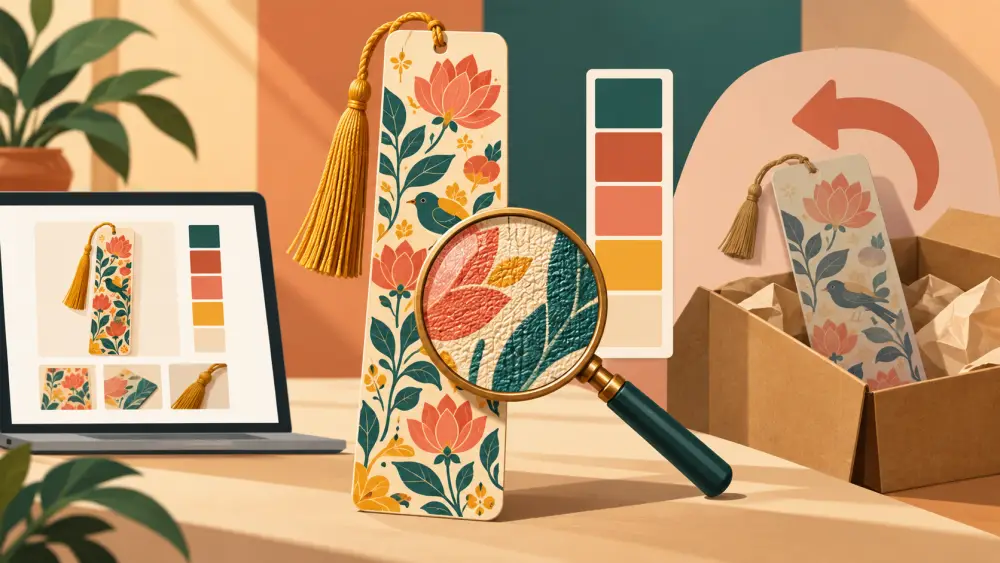
Bookmarks are cheap, light and easy to ship, so it is tempting to think nothing can go wrong. In practice, small items attract small but annoying complaints: the colour looks different, the size is not what the buyer imagined, the paper feels thinner than expected. Each one costs you a reply, sometimes a replacement, and sometimes a bad review. The good news is that nearly all of them can be handled in the listing.
Where disputes usually come from
Think about what a buyer sees: a glowing phone screen, a photo taken in your light, and a few lines of text. Then a paper rectangle arrives. Every gap between the screen and the paper is a possible complaint. For bookmarks, the common gaps are:
- Printed colour looks different from the screen version
- Size feels smaller or larger than pictured
- Material feels different from what the buyer imagined, such as paper versus card versus laminated finish
- Tassel, ribbon or charm differs from the photo
- The design in the photo is slightly cropped, so the actual print has extra elements
Describe the print honestly
Screens and printers do not agree on colour, and you cannot fix that. What you can do is say so. A single plain sentence works well: "Printed colours may look slightly different from your screen." Place it near the colour or design details, not hidden at the bottom of the page.
If a design uses deep reds, bright neons or dark backgrounds, be more careful. Those are the colours most likely to look different on paper. Showing the printed bookmark in a natural-light photo, next to the digital artwork if you wish, sets the right expectation. For more on this, read describing colour accurately online.
State the size in numbers
Write length and width in centimetres, and add a photo beside a pen or inside an open book. Do not leave size to the buyer's imagination. If there is a tassel, say whether the measurement includes it.
Name the material and finish
Say what the bookmark is made of and how it finishes: matte or glossy, laminated or plain, thick card or thin paper, pressed flowers, metal, or fabric. Avoid vague words such as premium or high quality. They mean different things to different people and create room for disagreement. See describing material and fabric honestly for the habit of being specific.
Photograph the actual product
Use real photos of the bookmark you ship, not only mockups or digital artwork. If you add a digital design image, label it clearly as artwork. A buyer who sees a close-up of the real edge and finish is far less likely to feel misled.
Write a short policy buyers can find
Decide in advance what you will do if something goes wrong, and write it plainly. For example, you might replace a bookmark that arrives bent or damaged if the buyer sends a photo within a few days of delivery. You might decline returns for small colour variation that was disclosed. Keep the wording friendly and clear, and confirm anything legal about consumer rights with an expert, since rules can change. Our post on cancellations, refunds and restocking helps you think through the practical side.
Pack so nothing bends
A bent bookmark is a valid complaint. Slip each one into a clear sleeve and add a piece of stiff card behind it, then ship in a flat mailer. Mark the outside "do not bend" if it helps. Sets of several bookmarks should be sleeved together so the corners do not rub.