
Why the weight you declared differs from what was charged
The usual reasons a shipping bill shows a higher weight than you entered, from packaging and rounding to box size, and how to check your own parcels.
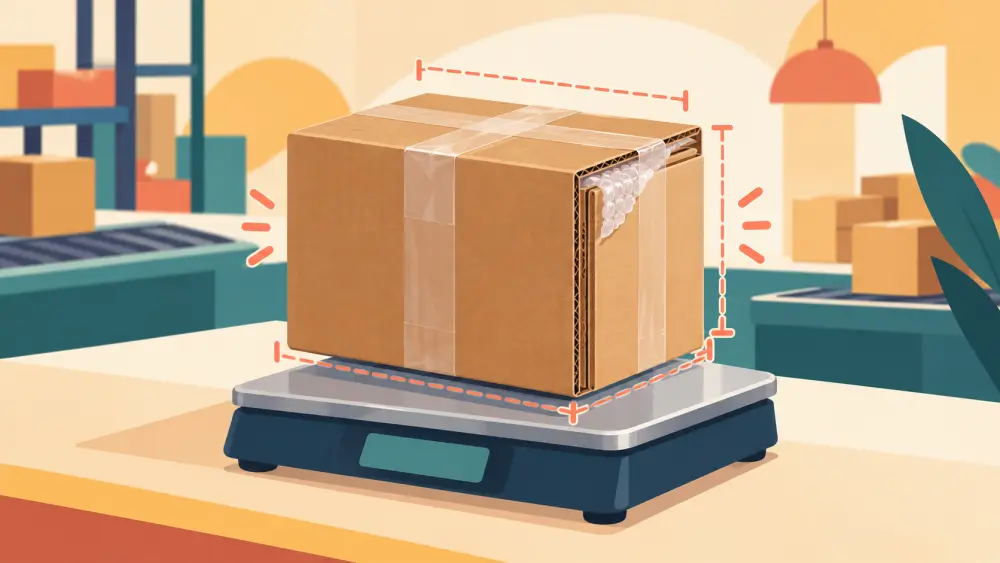
You entered 450 g at booking and the invoice says something heavier. It is a frustrating moment, especially when margins are thin. Before you blame the courier, check the common causes. Most are fixable on your side.
Cause 1, the product weight was entered instead of the parcel weight
The most frequent reason is simple. The seller types the weight of the product, from the supplier sheet or the label, and forgets the box, filler, tape and invoice. Those extras can add a surprising amount, especially for small items.
Always weigh the sealed parcel on a scale. Our post on how to measure and weigh a parcel correctly explains the routine.
Cause 2, the size-based figure was higher
Your courier may bill on a weight worked out from the box dimensions if that is higher than the scale weight. A light parcel in a large box can then be billed as heavier than it really is. You can read the idea in what is volumetric weight in simple words.
Check by measuring the packed box and comparing it with how your courier describes the calculation. I cannot say what yours uses, so look in your courier terms.
Cause 3, rounding up
Carriers usually charge in steps, not in exact grams. A parcel just over a step can be rounded up to the next one. So a parcel that is only slightly over a limit may be billed noticeably more. See shipping weight slab trim example for how a few grams can matter.
Cause 4, the parcel changed after you weighed it
It happens more than people think. You weighed the parcel, then slipped in a free sample, a thicker invoice or an extra layer of tape. Or the box swelled with damp air. Re-weigh after the last item goes in.
Cause 5, your scale is off
A cheap or old scale may read lower than it should. Test it with something of known weight, such as a sealed packet that states its net weight, and see if the reading matches. If it is off, adjust your entries or replace the scale.
Cause 6, measurement habits differ
You may measure a soft bag when it is relaxed, while the courier measures at the point where it bulges. Be consistent. Measure at the fullest point, as discussed in the measuring guide linked above.
How to investigate calmly
- Gather your records, the weight and size you noted at packing and any photo of the parcel on a scale.
- Compare them with the figures on the courier invoice or dashboard.
- Look for which factor is different, weight, size or rounding.
- Contact the courier with the specific mismatch, instead of a general complaint.
Be ready for any outcome. A dispute may be accepted, partly accepted or rejected, and I cannot predict which, so treat it as a conversation rather than a certainty.
Prevent it next time
- Keep a table of packed weights and sizes for each product.
- Pick the smallest box that is safe.
- Check for add-ons before sealing.
- Review your bills monthly to spot patterns.
The cost of repeated small differences adds up. If you want to see how it affects your pricing, read flat shipping fee vs real cost gap to see where the gap eats into your profit.