
How to measure and weigh a parcel correctly before booking
A step-by-step routine for weighing and measuring the finished, sealed parcel, and recording the numbers so your booking matches what the courier will see.
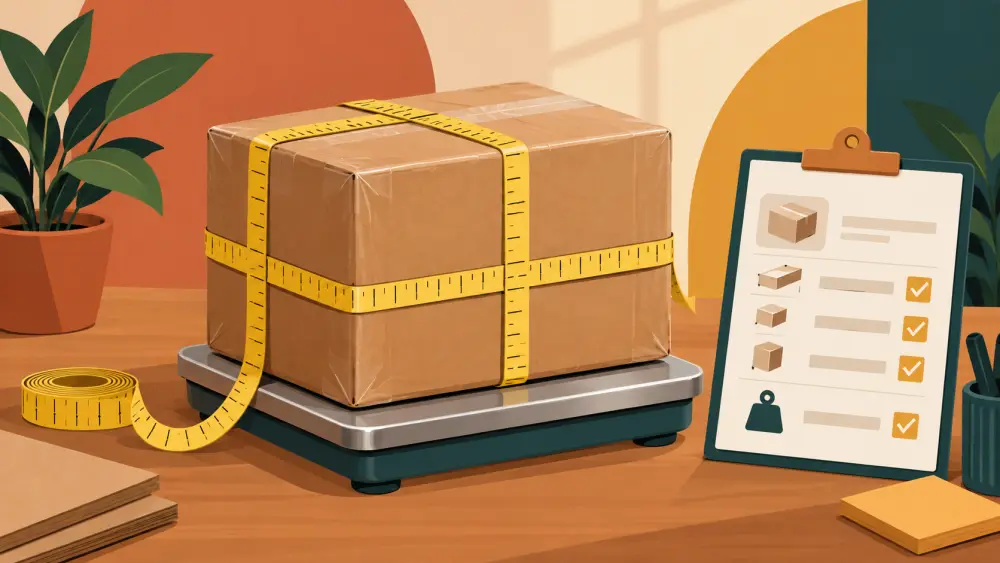
A wrong weight or size at booking is one of the most common reasons for surprise charges. The fix is a short routine you do on the finished parcel, every time, before you book.
Always measure the finished parcel
The parcel the courier picks up is the sealed one, with the box, filler, tape, invoice and any outer cover on it. That is the parcel to measure, not the bare product.
Weighing the product alone and adding a guess for packaging is how most mismatches begin. Pack the order fully first, then weigh and measure.
What you need
- A scale that you trust, ideally one that reads in small steps.
- A measuring tape or ruler in centimetres.
- A notebook or phone to write numbers down.
Weigh it
- Place the sealed parcel on the scale, away from the edges and from anything leaning on it.
- Wait until the number settles.
- Write the number down in the unit your booking form uses. If your scale shows kilograms and your form asks for grams, convert before you type.
- For lightweight parcels, check the scale shows tiny differences. If it jumps in big steps, it is not accurate enough for your needs. Replace it before it costs you money.
Measure it
Measure length, width and height of the sealed parcel.
- Length is usually the longest side, then width, then height.
- Measure at the widest point of each side, including any bulges.
- If the parcel is soft and bulges when filled, measure at its fullest, not squeezed.
- Round up to the next whole centimetre, rather than down, so you are not underreporting.
I cannot give you a courier's own measuring rules, so check your courier terms for how they round or treat bulges.
Record the numbers
Write the weight and the three dimensions next to the order number or product name. If you keep a spreadsheet of products, add columns for packed weight and packed size. Reusing numbers for repeat products saves time, but double check whenever you change a box or filler.
Common mistakes
- Using the product weight from the supplier instead of weighing the pack.
- Forgetting to count tape, labels, inserts and the outer cover.
- Measuring before adding bubble wrap.
- Mixing up inches and centimetres.
- Typing grams where kilograms are needed, or the other way round.
Any one of these can change what you pay.
Do a double check on big orders
If the parcel holds several items, weigh it again after you finish packing, not before. Add-ons, gifts and samples can change the number without you noticing.
Why it matters
A correct number at booking lets you see the true shipping cost before the courier surprises you. It also helps you to price shipping fairly, using flat shipping vs weight-based shipping for a mixed catalogue. For how the size figure can change your charge, read what is volumetric weight in simple words.
Make it a checkpoint
Treat measuring and weighing as a step in your packing line, just like sealing the box. When it becomes automatic, you will find fewer disputes about weight and more predictable shipping costs.