
Delivery tips for apartments, villages and rural addresses
A flat in a gated society and a house in a village need very different details on the label. Here is what to ask for in each case so the delivery person can actually find the door.
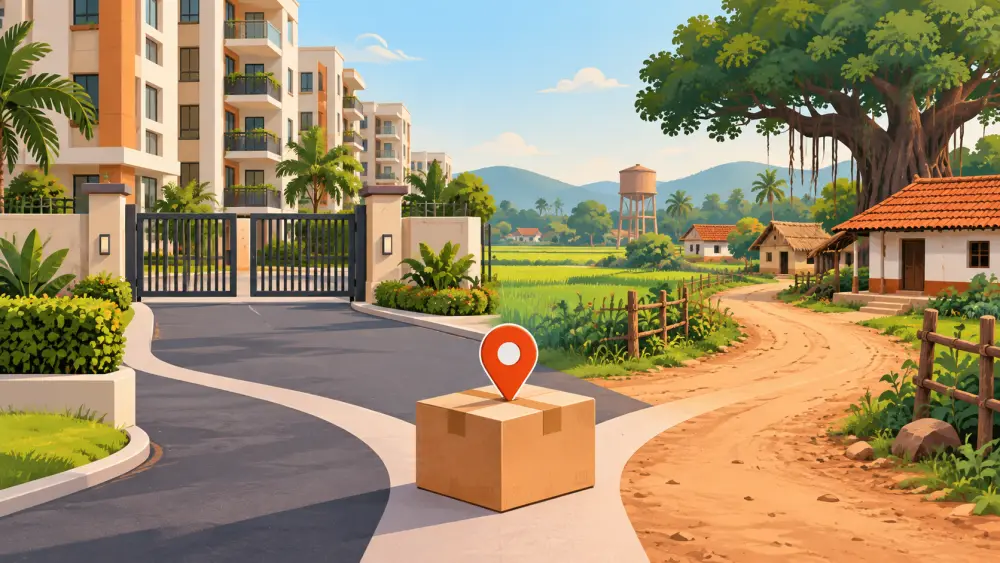
One address form does not fit all homes
A standard address box asks for house number, street, city and pincode. That works for a regular colony house. It leaves gaps for a flat inside a gated apartment complex or for a home in a village where lanes have no names. If you only collect the basics, the delivery person is left phoning the customer or giving up.
Here is what extra detail helps in each case. Treat these as things to ask your customer, not as promises about what any courier will or will not do.
Apartments and gated societies
Big complexes have several blocks, towers and wings, and the same flat number can appear more than once. Ask for:
- Flat number plus block or tower name (for example "Flat 402, Tower B").
- The full name of the apartment or society, spelt the way the gate board spells it.
- The floor, if the customer is unsure about the block lettering.
- A phone number that will be picked up at the gate, since security staff often call residents before letting anyone in.
- Any entry rule, such as "delivery people must leave parcels at the security desk".
A short line in your order confirmation message can handle this: "Please send your tower or block name and tell us if parcels are left with security." Most customers are glad you asked.
Independent houses in towns
Lane numbering can be confusing. Ask for the nearest main road and one landmark that is easy to describe, such as a temple, school or well-known shop. Also ask for the house name if there is one, because many homes are known by a name board rather than a number.
Villages and rural addresses
This is where missing detail causes the most trouble. A village address often has no street at all. Ask for:
- Village name, then the mandal, taluk or tehsil, then the district. The post office name is also useful.
- A landmark such as the panchayat office, a school, a temple or the bus stop.
- The name of the person to ask for, since neighbours usually know each other.
- A phone number the customer keeps with them during the day, and ideally a second number from a family member.
- If the customer works in the fields or travels, a good time window to call.
Be honest with yourself about reach. Whether a given courier reaches a particular pincode is something you should check at the time of booking, not assume. If the customer's pincode cannot be served, tell them early and offer an alternative such as a nearby town pickup address, rather than letting the order hang.
Make it easy for the customer to give detail
People do not mind giving more information if you explain why. A good message is short: "To make sure your parcel reaches you, could you share a landmark and an alternate phone number?" Avoid long forms and avoid asking everything again if the customer already gave it.
Cross-check before you ship
Read the final address and ask yourself whether a stranger could find the door with only this text and a phone. If not, ask one more question. This habit connects to the larger costs described in what a returned order really costs, and it matters most on COD parcels, where a missed delivery can turn into a refusal or return, as explained in cash on delivery without the chaos.
Keep notes for repeat customers
When a customer from an apartment or village gets a successful delivery, save the address exactly as it worked, including the landmark and phone number. Next time you can ask, "Same address as last time?" That saves the customer effort and saves you a round of questions.