
When self-shipping makes sense for nearby local orders
For customers in your own neighbourhood or city, delivering by yourself, a family member or a local messenger can be faster and friendlier than a courier, if you plan it properly.
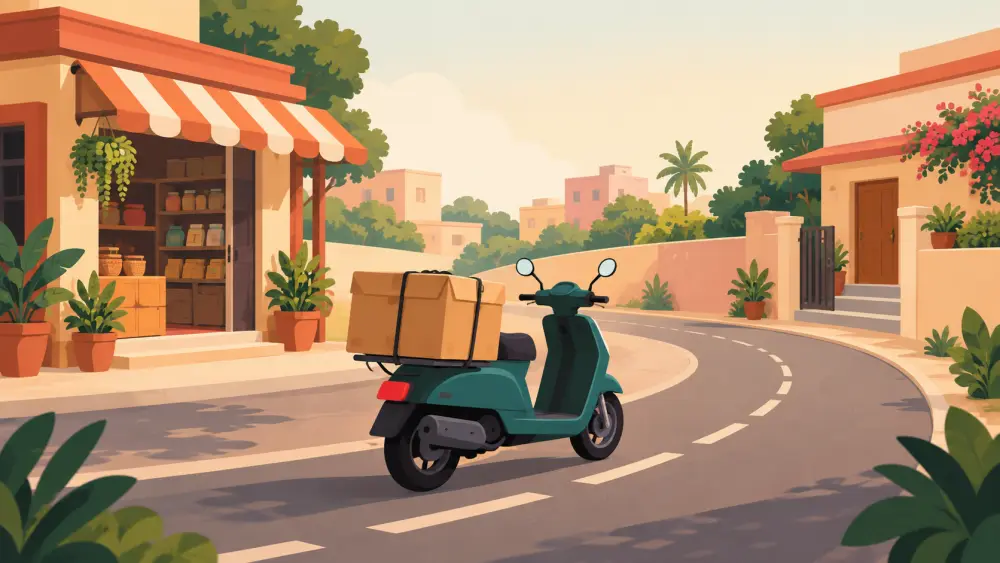
Not every order needs to travel across India. If a good share of your customers live in your own city, a courier can be more complicated than the job requires. Delivering those parcels yourself, with a helper or through a local messenger, can work well. Here is how to judge when it fits and how to keep it from eating your day.
What counts as local
Local usually means an area you can reach in a short ride, such as your own neighbourhood, a few nearby colonies or one part of the city. The point is that the trip is short enough that you or someone you trust can do it without a big loss of time. If the route is long or the roads are heavy, the maths changes.
When it tends to make sense
Self-delivery can fit in a few situations.
- Several orders go to the same area, so one trip serves multiple customers.
- The product is fragile or delicate, and you would rather carry it upright and handle it yourself.
- The order is a gift with a delivery time that matters.
- The customer is a repeat buyer, and a personal touch strengthens the relationship.
- Pickup or delivery by courier is unreliable in your area.
If none of these apply, a courier may be simpler.
Choose your delivery method
You have a few ways to do local delivery.
- You deliver yourself. Good when volume is low and the personal touch is part of your brand.
- A family member or helper delivers. Works if they are reliable and you share a clear route.
- A local messenger or on-demand rider takes the parcel. Useful when you cannot leave, but you pay per trip and need to trust the person.
- The customer collects from you. Some customers prefer to pick up, particularly for gifts or bulky items.
Match the method to the order. Do not hand a high-value item to someone you have not worked with before.
Count your real cost
Do not assume local is free. Think about fuel, your time, and the work you are not doing while you ride around. If you use a messenger, think about what they charge per trip. Compare the total with what a courier would cost for the same parcel, using your own quotes, and decide order by order. You do not need exact figures to see whether it is worth it, just honest ones.
Batch your trips
The easiest way to keep local delivery sane is to group orders. Pick one or two delivery windows a day, collect everything for each zone, and plan a single route. Tell customers the window up front so they can be available. This is the same idea as organising pickups, covered in scheduling courier pickups around your working day.
Handle payments and proof
For cash on delivery, carry change and note what you collect. For prepaid orders, confirm the parcel is handed to the right person and take a quick photo or message for proof. Keep a simple log with date, customer, area and the outcome. Treat these orders with the same care as shipped ones, including tracking updates sent by message, as in order tracking your customers can trust.
Know when to stop
If local deliveries start to take half your day, or you find yourself rushing packing to make a trip, it may be time to move some routes to a courier. Local delivery should support the business, not replace the work of running it. For a broader choice between options, see self-shipping vs using a shipping aggregator.