
"What is a privacy policy page? (and why stores have one)"
A privacy policy page tells customers what personal details your store collects, why you need them and how you treat them, in plain language rather than legal fog.
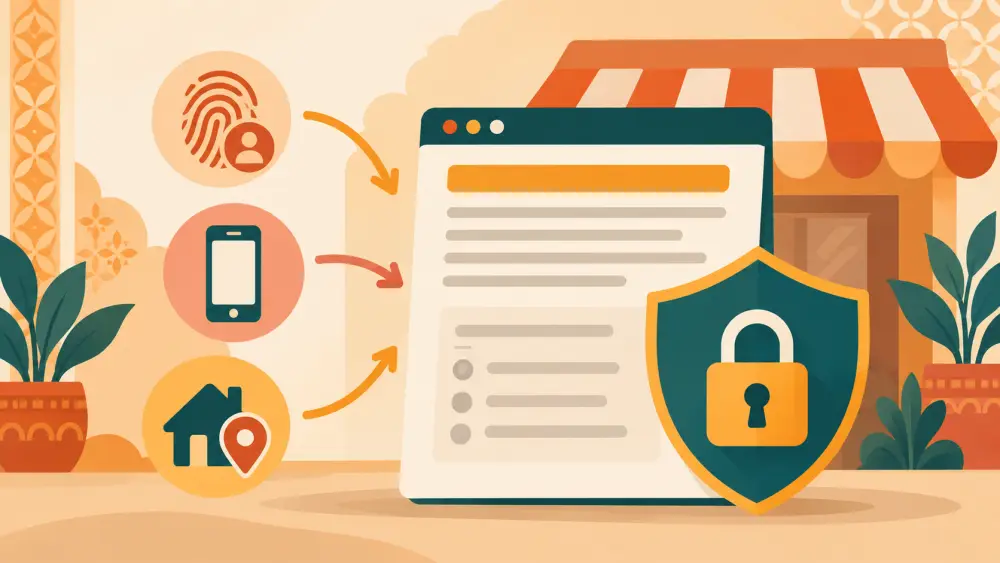
When someone buys from your store, they hand you more than money. They give you a name, a phone number and a home address. A privacy policy is the page where you say what you do with those details. Almost every online store has one, and customers increasingly look for it before they trust a new brand.
The idea in simple words
Think of it as a promise written down. You are saying, here is what we collect, here is why, here is who sees it, and here is how you can reach us about it. It is less about protecting you from lawyers and more about being honest with the person who just typed their address into your checkout.
I am not giving legal advice here. Data and privacy rules exist, they change, and what applies to your business depends on how you operate. Please have a qualified professional review the final page, or check the current official guidance.
What stores typically collect
Look at your own checkout and list what you actually ask for. A small store might collect.
- Name.
- Phone number, used for delivery calls and order updates.
- Email address, if you send order confirmations.
- Delivery address with pincode.
- Order history, meaning what was bought and when.
- Payment status, such as paid, pending or COD. If you take online payments through a payment provider, card and UPI details are handled by that provider, so say so only if it is true for your setup.
- Anything the customer types into a note or message.
If you use tools like analytics or a pixel, the page should mention that too. Connecting Google Analytics to your store and add a Meta Pixel ID to your store describe those tools, and if you switch them on, your privacy page should say that.
What to say about each one
A good page answers four questions in short paragraphs.
- What do you collect? Use the list above, trimmed to what is true for you.
- Why? To deliver the order, to contact the customer about it, to send invoices, to prevent fraud, to answer questions.
- Who sees it? Your courier needs the address and phone to deliver. Your payment provider processes the payment. Say that other parties get only what they need.
- How can a customer reach you about their data? Give an email or WhatsApp number.
Do not promise things you cannot do. If you cannot delete every trace of an order because you need records, do not claim you can. If you do not sell customer data, you can say so, but only if it is true.
Sample opening
Here is a tone to aim for. "We collect your name, phone number, email and delivery address so that we can ship your order and contact you about it. We share these details only with the courier and payment services we use to complete your order. If you have a question about your information, write to us at the email below."
Short, calm and true beats long and complicated.
Keep your own data tidy
A policy is worthless if your practice is messy. Do not paste customer addresses into public groups. Export your orders only when you need to and store the file safely. Keeping your customer data yours covers the ownership side, and exporting customers and orders shows how to take your data out when you need it.
Put it where people can see it
Link the page in your footer and near the place where you collect details. Update it whenever you add a new tool or a new type of data. Date the page so customers know how fresh it is.
A privacy page will not make your store grow overnight, but its absence can make a careful buyer hesitate. A few honest paragraphs, reviewed by a professional, are a small price for that trust.