
What is a bundle offer? (and how to price one)
A bundle groups products at one combined price, and a simple cost check shows how much discount you can give without losing your margin.

What a bundle is
A bundle offer sells two or more products together at a single price, usually a little lower than buying them one by one. A scented candle plus a matching brass holder is a classic example. The customer gets a ready-made set, and you get a larger order from a single parcel.
Bundles suit sellers whose products naturally belong together: a face wash with a moisturiser, a kurta with a dupatta, a notebook with a pen. The test is simple. Would a customer be glad to have these in one box?
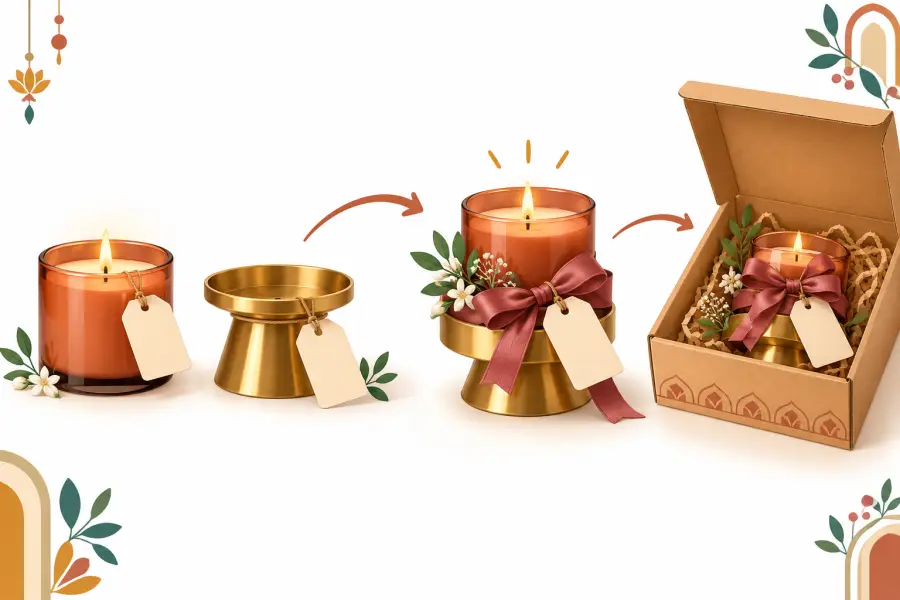
Price it from cost, not from feel
Say you sell these:
- A soy candle at Rs 450. It costs you Rs 180 to make and pack.
- A small brass holder at Rs 350. You buy it for Rs 150.
Bought separately, the customer pays Rs 800, and your cost is Rs 330, leaving Rs 470 of margin.
You want a bundle price of Rs 699 so the saving is easy to say out loud. At Rs 699 the margin is Rs 699 minus Rs 330, which is Rs 369. The customer saves Rs 101, and you still earn Rs 369. You also share one box, one label and one courier charge instead of two, which helps.
Now check what a deeper discount does. At Rs 599, margin falls to Rs 269. After a payment fee and shipping that might be thin. The point of the exercise is to know your floor before you announce the price.
Our post on the maximum bundle discount you can afford from cost gives a formula for finding that floor, and bundle price versus separate price profit compares the two outcomes side by side.
Watch your unequal margins
In the example above, the candle has a better margin than the holder. If customers pick only the holder from the bundle, you earn less than you think. When your items differ a lot in margin, price with care. The post on pricing a bundle with unequal margins covers this.
Name and describe it clearly
- Give the bundle a plain name such as "Candle and Holder Set".
- List every item inside, with sizes, so there are no surprises.
- Show the separate prices and the bundle price so the saving is visible.
- Say what happens on returns. If one item is damaged, do you replace only that item or the whole set?
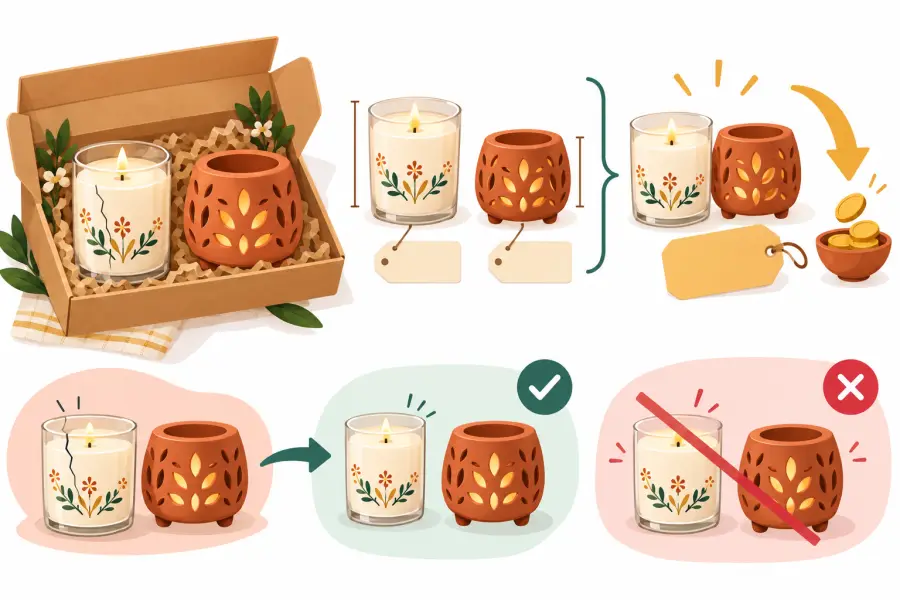
Handling stock
A bundle uses up the stock of every item inside it. If you have 20 candles and 8 holders, you can make only 8 bundles. Decide in advance whether the bundle is a limited run, and note the count so you do not oversell.
Varchas Stores lets you add and manage ordinary products with variants and stock, so one practical approach is to create the set as its own product with its own price and stock count, and describe the contents in the listing. There is no dedicated bundle builder, so treat the set as a separate listing rather than something that links to other stock automatically, and adjust the counts yourself when you sell one.
A small trial
Try one bundle for a month, announce it on Instagram and WhatsApp, and look at how many sets sold against singles. If nobody wants it, you have lost nothing but some packing time. If it sells, build the next set from your best-selling pair. For more on keeping the maths honest, see buy one get one free: the margin trap.