
Does buy one get one free make me lose money?
Buy one get one free halves your price per unit, so unless your margin is above fifty percent the offer loses money, as this worked example shows.
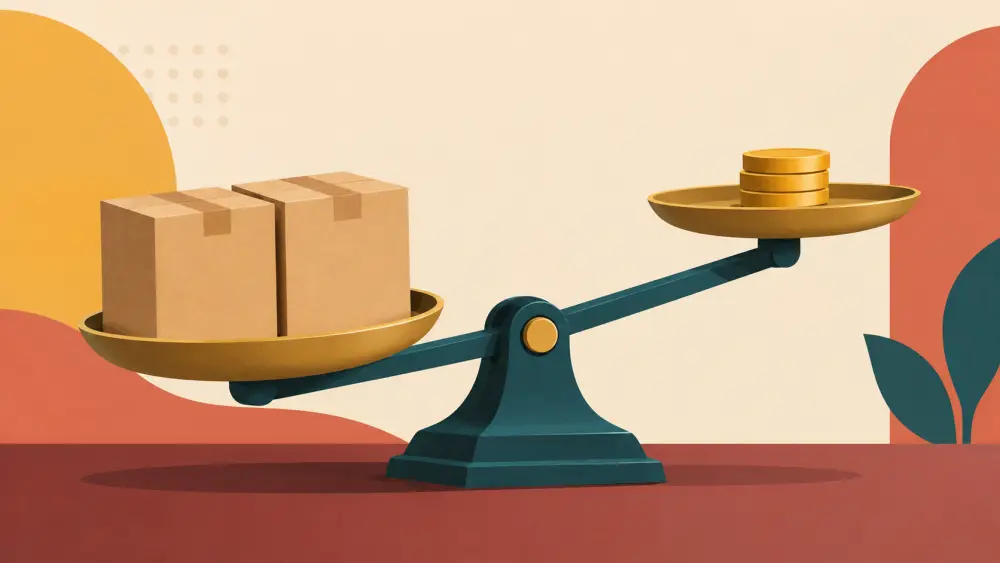
Buy one get one free is one of the most familiar offers on any board or banner. It is also one of the easiest ways for a small seller to lose money without noticing, because the customer pays for one item and you hand over two.
The arithmetic
Say a cotton scarf is priced at Rs 400 and costs you Rs 220 in all (illustrative numbers).
Normal sale of one scarf.
- Revenue: Rs 400
- Cost: Rs 220
- Profit: Rs 180
Now the offer, where the customer takes two scarves and pays for one.
- Revenue: Rs 400
- Cost of two scarves: 2 x 220 = Rs 440
- Result: 400 - 440 = a loss of Rs 40
This is before shipping, which for two items is often more than for one. So you are paying Rs 40 or more for the privilege of giving away stock.
Why the margin matters
BOGO is the same as a 50 percent discount on a pair. It only works if your cost is under half the price. Your scarf costs Rs 220 against a price of Rs 400, which is 55 percent, so you are over the line.
A quick test is to double your cost and compare with the price. If twice your cost is higher than your price, BOGO loses money.
What price makes it break even?
To break even on two units costing Rs 440, the single price must be Rs 440. That means raising the scarf from Rs 400 to at least Rs 440 before running the offer. But then customers who buy just one scarf pay Rs 440, and your normal profit rises to Rs 220. Whether they accept the higher price is something you can only learn by trying.
Aim above break-even, not on it. If you want Rs 100 profit on the pair, the single price needs to be Rs 540.
Why sellers run it anyway
There are reasons that make sense.
- Clearing slow stock whose cost is already sunk
- Bringing in new buyers who may come back
- Raising basket size so shipping per item falls
If you do run it, do it deliberately. Use stock that is older or has a lower cost, rather than your best seller.
Safer alternatives
- Buy two, get a smaller discount. See buy two get 10 percent off worked example.
- A free gift instead of a free item. See free gift versus discount.
- A bundle at a fixed price with a different mix of products, with one cheaper item.
- A second item at 30 percent off, which you can model the same way.
Before you press go
Write your numbers in a line. Price, cost, offer revenue, offer cost, result. If the result is negative, either change the offer or accept that you are paying for something else, like stock clearance, and put a limit on how many pairs you will give.
And remember that the customer thinks of "free". That feeling is powerful, so use it carefully. Read coupons that actually move stock for gentler ways to move inventory without giving it away.