
What is the difference between a tax-inclusive and tax-exclusive price?
An inclusive price already contains the tax, an exclusive price adds it on top, and mixing them up is a common source of pricing mistakes.
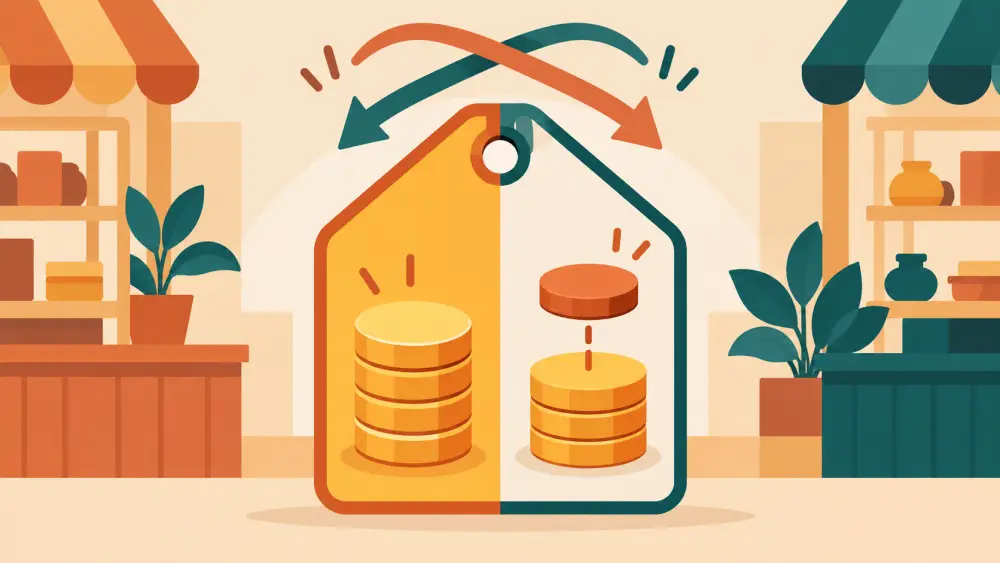
Sooner or later you will see two kinds of prices. One says the tax is included. The other says the tax is extra. They mean different things for what the customer pays and what you keep. This post explains the idea using a placeholder tax rate only. It is not a real rate, and you should never use it for your own billing.
The two ideas
A tax-exclusive price is the base price before tax. Tax is calculated and added on top at the end.
A tax-inclusive price is the final price the customer pays. The tax is already inside it.
A worked example with a placeholder rate
Let us say, purely for illustration, that the tax is 10 percent.
Exclusive: the base price is Rs 1,000. Tax at 10 percent is Rs 100. The customer pays Rs 1,100.
Inclusive: the price shown is Rs 1,100. Inside it is Rs 1,000 of base price and Rs 100 of tax.
Same product, same final payment of Rs 1,100. The only difference is what number you display and call the price.
Going backwards is where mistakes happen
Suppose you only know the inclusive price of Rs 1,100 and want the base. A common slip is to take 10 percent off Rs 1,100, which is Rs 110, and conclude the base is Rs 990. That is wrong.
The tax was 10 percent of the base, not of the total. The base price times 1.10 gives Rs 1,100, so the base is Rs 1,100 divided by 1.10, which is Rs 1,000. The tax inside is Rs 100.
Remember: to remove tax from an inclusive price, divide by one plus the rate. To add it, multiply by one plus the rate.
Why this matters for sellers
- Profit. If your listed price is inclusive, only the base part is yours. A seller who treats the Rs 1,100 as revenue will overestimate profit by the Rs 100 that belongs to the tax authority.
- Pricing. When you work out your margin, use the base price, not the tax-inclusive price.
- Competitors. If another seller shows an inclusive price and you show an exclusive one, the numbers are not comparable. Check which one is shown before you judge that someone is cheaper.
- Customers. Shoppers generally find it easier when the price on the page is the price they pay. Surprises at checkout upset people.
Check the rules for your situation
Whether you must charge tax, at what rate, how it applies to your goods, and how you must display prices all depend on your business and the current law, which changes. Do not use the figures in this article. Ask a CA or consult official sources for what applies to you. For a general introduction, read GST and selling online, the basics. And if you want help setting up where business details live in your store, set store name, support email and GSTIN shows where to enter them.
A small habit that helps
Keep two columns in your price sheet: base price and final price. Write beside them whether each is inclusive or exclusive, and which one the customer sees. Then when you work out your margin, always use the base column.
To go from a target margin to a base price, see price from a target margin.
Know which price you are talking about, always. It is the simplest tax habit and it saves the most trouble.