
Spotting risky COD orders without being unfair to customers
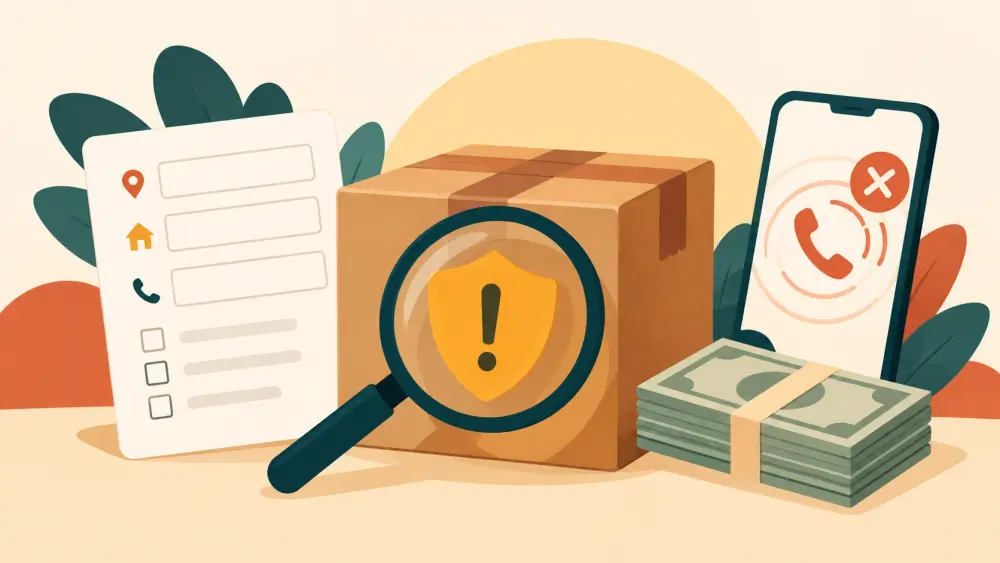
You can protect yourself from failed COD parcels by watching neutral order signals, such as incomplete details or silence after confirmation, instead of guessing from a name, region or gender.
The temptation to profile
After a few refused parcels, many sellers start building theories. "Orders from that city always fail." "Customers with this kind of name never pick up." These ideas feel like experience, but they are guesses wearing the clothes of data. They are also unfair to honest buyers, who far outnumber the ones who cause trouble.
A better approach is to look at the order itself. Ask whether the details are complete and whether the customer responds, because those are things you can actually check.
I do not recommend judging anyone by region, name, language or gender. It is unfair, it is not reliable, and you may turn away good customers.
Neutral signals worth noticing
These are properties of the order and the conversation, not of the person.
- Incomplete address. No house number, no landmark, or a pincode that does not match the city.
- A phone number that does not connect or is clearly mistyped.
- No reply to your confirmation message within the time you set.
- A very unusual quantity for your product, for example ten of an item people normally buy one of. Unusual does not mean bad, but it deserves a quick message to check.
- Conflicting details, such as two different names or addresses in the same order.
- Repeated cancellation of orders with you, if you keep your own records.
Each of these is a reason to pause and ask, not a reason to accuse.
What to do when you see a signal
Respond with a question, not a verdict.
- For an incomplete address, ask for the missing details politely.
- For a phone that does not connect, send a message and try again at another time.
- For no reply, wait the period you promised, try one call, then hold the order.
- For an unusual quantity, confirm that it is intended and that the amount to be paid is clear.
If the signal clears up, ship as normal. If it does not, you may decide to cancel or offer prepaid instead. In either case, you acted on facts you could explain.
Be consistent
Apply the same rules to every customer. If you ask one buyer to confirm by message, ask all of them. Consistency keeps you fair and also makes your own records meaningful, because you can compare like with like. You can write your rules in a small list and keep it near your packing table.
Offer a path forward
Rather than shutting the door, offer an option. "We could not reach you for confirmation. If you prefer, you can pay online by UPI and we will ship right away." That respects the customer and still protects you. More on this in how to nudge customers toward prepaid.
Do not overreact
One strange order does not make a pattern. Even a careful process will meet failures, and you should not expect to remove them all. What you want is fewer avoidable surprises. The thinking in why COD orders fail and how to prevent it and the checks in cash on delivery without the chaos cover this in more depth.
Remember what is at stake
Your customers are real people trying to buy something they like. If you build your process around clear details and honest conversation, you protect your money and your reputation together. Fairness and good business point in the same direction here.