
Asking for photo or video proof in your return policy
Asking for a photo or an unboxing video is a reasonable way to settle damage claims, as long as the request is simple and fair. Here is how to phrase it so honest customers do not feel doubted.
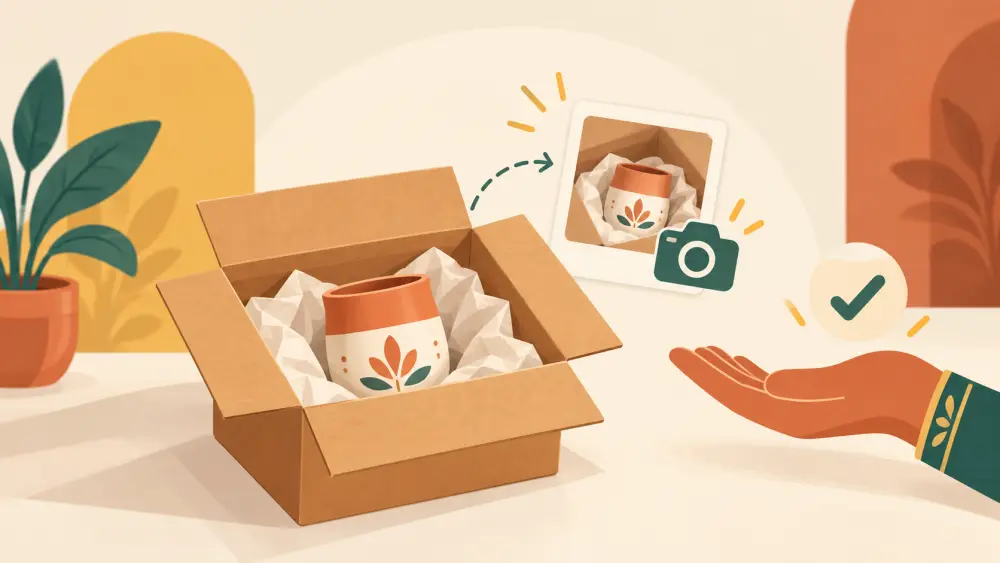
When a customer says "it arrived broken", you need some way to see what they see. Asking for a photo or short video is a common answer. It is your own policy choice, not a rule that every store must follow, so decide what suits your products and write it down kindly.
Why proof helps both sides
Proof protects you from claims you cannot verify, but it also protects the honest customer, because it lets you say yes quickly. A clear photo can turn a long exchange of messages into a single reply. Think of it as a shortcut, not a trap.
Keep the request small
The more effort you demand, the more you signal distrust. Ask for the simplest thing that works.
- One or two photos of the damaged item.
- One photo of the outer box and the shipping label.
- For a wrong item, a photo of what was received.
Only ask for a video when a photo cannot show the problem, for example a product that leaks, does not switch on or has a moving part that does not work. A short phone video is enough.
Explain why you are asking
People accept a request more easily when they understand it. A line like "This helps us check what happened and sort it out quickly" does more than a list of conditions. Avoid sentences that sound like warnings, such as "No claim without video, no exceptions". A rule that sounds suspicious will lose you the goodwill of customers who did nothing wrong.
Tell customers before the problem happens
Do not surprise someone with a proof request after their parcel arrives damaged. Mention it in three places.
- On the return policy page.
- In the packing slip or a short note inside the parcel.
- In your first reply when a customer reports a problem.
If you plan to ask for an opening video, say so in advance and tell people how to do it: keep the sealed parcel in view, record while opening, and show all sides. Do not make this a condition for every kind of claim unless your products genuinely need it.
Be fair about what you cannot expect
Not every buyer will think to record the opening, particularly older customers or people receiving a gift. If someone lacks a video, do not shut the conversation. Ask for what they do have: photos, the box, the packaging, the message from the courier. Decide in advance how you will handle claims without ideal proof, such as looking at the order history and the details of the packing.
Match the ask to the product
A sealed, low-value item may need only one photo. A fragile, high-value piece may justify a video. Keep a short note for each product category so your replies stay consistent. For fragile categories, look at your own packing too. If the same product is arriving damaged again and again, the answer is better packaging, not more proof. The cost of a damaged-in-transit parcel shows why prevention is cheaper than disputes.
How to word it
A simple version: "If something arrives damaged or incorrect, please message us within the return window with a photo of the item and the outer box. For items that do not work, a short video helps. If you cannot send these, tell us what you have and we will do our best to help."
That sentence names the request, the deadline and a fallback. It does not threaten, and it does not claim that proof is legally required.
Respond quickly
A customer who sends proof and then waits days for an answer feels ignored, whatever the policy says. Acknowledge the request the same day if you can, and say what happens next. For a wider view of the refund path, read Cancellations, refunds and restocking and Processing a full refund via Cashfree.