
How to pack board games so they reach the customer safely
The box is part of the product, and corners are the first thing to crush. Protect the edges, keep the contents from rattling and use a proper outer carton.
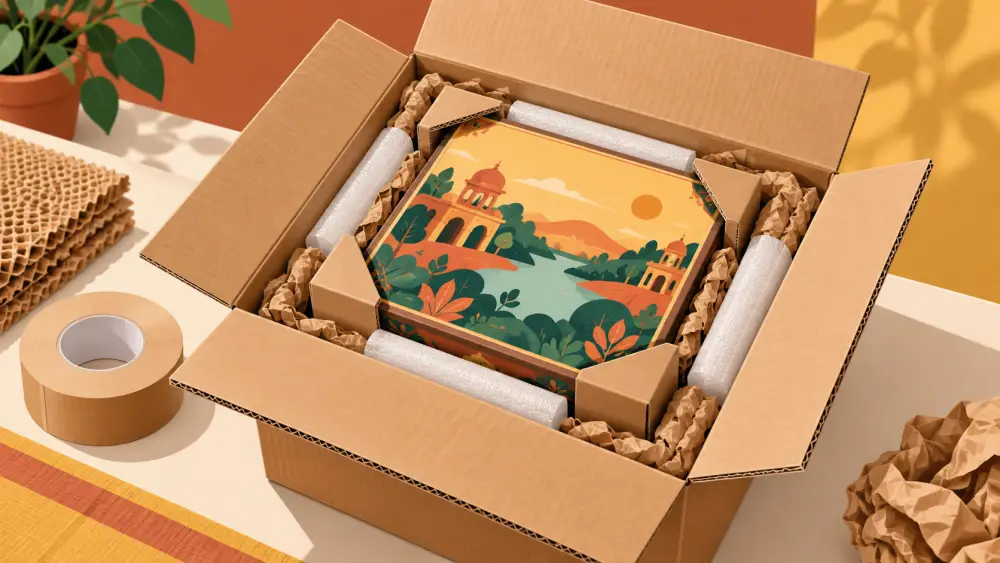
With most products, the packaging is something the customer throws away. With a board game, the box is the product. It sits on a shelf, it gets gifted and it is photographed. A crushed corner or a torn edge is a visible flaw, even when every piece inside is perfect. Packing a board game is mainly about protecting the box.
Start with the corners
Box corners take the hit in transit. Add corner protectors, which you can make from folded cardboard or buy as ready-made pieces. Slide them on each corner, or wrap the box in corrugated sheet that sticks out slightly beyond the edges. This gives the outer carton a crumple zone, so the force lands on the protection and not the box.
Check the box is closed and the contents are stable
Before wrapping, make sure the box lid is closed properly and nothing rattles. If the game has loose pieces, tokens and cards inside bags, check that the bags are sealed. A box that opens in transit can scatter pieces and leave the buyer with a game they cannot play. If the lid is loose, a thin band of paper tape across the seam, kept off the printed surface, keeps it closed. Do not tape directly onto glossy printing, because peeling tape tears the finish.
Add a clean layer of wrap
Wrap the box in a clear sleeve or plastic wrap, or in a sheet of soft paper. This protects against scuffs, dust and moisture, and it makes the game look cared for. A heat-shrink sleeve is neat but not necessary. Whatever you use, do not press anything sticky on the game's artwork.
Use a snug outer carton
Choose a corrugated box slightly bigger than the game. The aim is to leave a gap of a couple of centimetres on every side, which you fill with crumpled paper or bubble wrap. Too much space lets the box slide and bump. Too little gives no cushioning. A shake test shows whether it moves.
For larger or heavy games, double-wall corrugated board is better, since heavy items can flex a thin carton and crush the edges.
Protect against damp
Cardboard softens with moisture, and a damp box is a ruined box. Sealed plastic wrap around the game, plus a dry outer carton, protects it. Store packed parcels off the floor while they wait for pickup, and keep them away from leaks and humidity.
Pack multiple games carefully
Do not let two game boxes touch face to face, because the artwork can rub. Place a sheet of card or a layer of paper between them. If you can, ship each in its own carton, or arrange them so the heavier one sits at the bottom.
Label and record
Write the order number on the outside, and mark "Do not bend" or "This side up". These are requests, not guarantees. Photograph the finished parcel and, if you wish, the game before wrapping, to have a record in case of a dispute. See cancellations, refunds and restocking for what to do if the game arrives damaged.
Include a piece list
A card listing the components allows the buyer to verify the contents. It also protects you if a piece goes missing in a dispute, a topic covered in board games return risks. Good packing keeps the shelf-worthy box in good condition, and a customer who receives a crisp, intact game treats it as a gift.