
Returns and complaints when selling millets online and how to reduce them
Many millet buyers are new to cooking the grain and blame the product when the dish fails. Clear cooking guidance in the listing prevents most of those disputes.
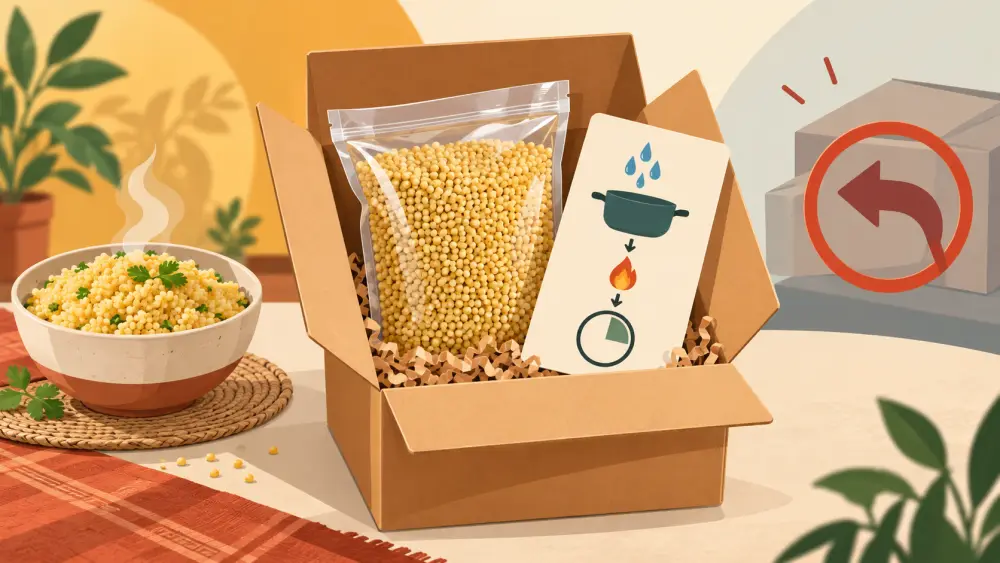
A buyer who has never cooked foxtail millet may treat it like rice, get a sticky or hard result and decide the product is bad. You did nothing wrong, but you still receive the complaint. With millets, the main risk is not defects. It is a customer who bought with good intentions, did not know how to cook, and is now disappointed. The fix is to teach them before they order and again when the parcel arrives.
Why the complaints happen
Millets are not a drop-in replacement for rice or wheat. Soaking time, water ratio and cooking time differ for each grain. A new buyer may also expect the taste or texture of a familiar food. When the result is different, they conclude something is wrong. Setting expectations is cheaper than refunding.
Put a cooking guide in the listing
For every millet, add a short section in the description:
- How to use it: as rice, porridge, upma, dosa batter, or flour.
- Soaking: whether it helps, and for roughly how long, if that is what you actually recommend.
- Water ratio and cooking time as a starting point, with a note that results vary by cooker and by grain.
- One simple first recipe a beginner can follow.
Use your own tested guidance. Do not copy a recipe you have not tried. The post on what details to put in every product description covers where this fits.
Describe the taste and texture honestly
Millets have earthy, nutty flavours and a different bite. Say so. A line such as "earthier than rice, firmer when cooked" prepares the buyer. Avoid health promises. Do not claim the grain treats or cures anything; health and nutrition claims have rules, and you should confirm what you may say with a qualified professional. See avoiding exaggerated claims.
Offer a starter size
A first-time buyer who orders a large pack and dislikes the result is a likely complainant. Offer a small pack as a variant so the first purchase is low risk. If they like it, they come back for more, and that is how repeat customers are built.
Send guidance with the parcel
Include a small card with the cooking basics and a way to message you. This catches the buyer at the moment they are cooking. A customer who gets stuck and can ask you is far less likely to send a complaint than one who is left alone with a failed dish.
Be available on WhatsApp
Many millet questions are quick: "how much water for this one?" Reply fast and the customer is saved. Keep a few standard answers ready for the common grains you sell, and tell the buyer where to reach you in the listing and the card.
Agree your own policy in advance
Decide what you will do if the parcel arrives damaged, if the wrong millet was sent, and if the customer simply did not enjoy it. Write the policy plainly on your store. The first two usually deserve a replacement or refund. The third is your decision; some sellers offer help with cooking first, and others offer a small credit. Check any legal obligations with a professional, since they depend on how you sell.
Learn from the complaints
If many buyers struggle with one grain, rewrite its guide. Complaints are free feedback on your listing. See cancellations, refunds and restocking for handling the stock after a refund.
Next step
Teach before they cook, offer a starter size, answer fast. The Founding Offer covers the first 10 stores with setup done together. Get in touch at /early-access.