
How to shoot in-use lifestyle photos on a small budget
A lifestyle photo shows the product in real life. You can do it with a phone, a corner of your home, your own hands and a few props you already own.
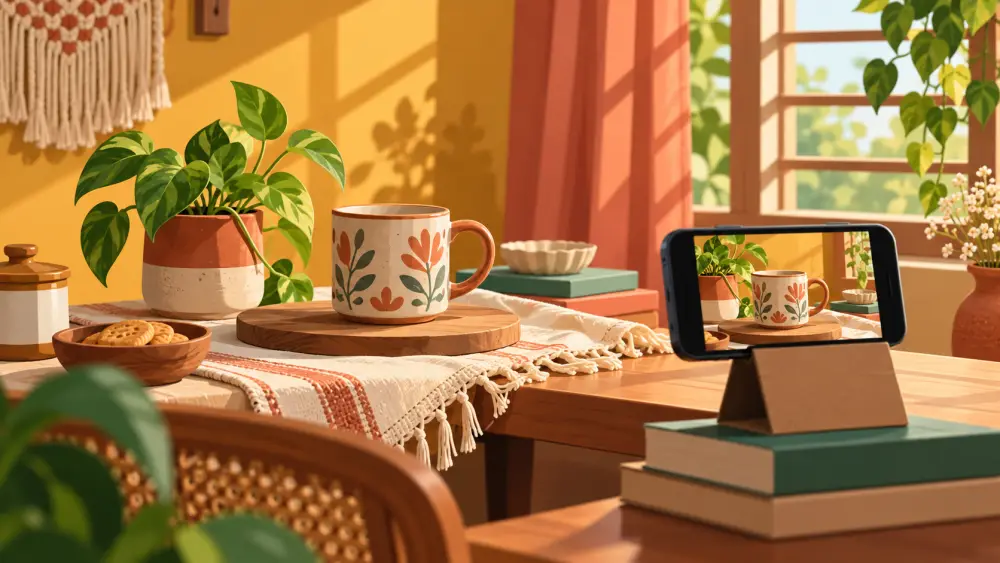
A plain photo on a white backdrop shows what a product is. A lifestyle photo shows how it fits into someone's day. You do not need a model, a studio or a stylist for this. You need a believable setting and a bit of planning.
Pick a real setting
Choose a place that suits the product and that you can shoot in good light. A kitchen counter for food and cookware, a desk for stationery and accessories, a bedside table for candles and decor, a balcony for plants and bags. Tidy the space and remove anything unrelated. A real, slightly lived-in setting feels more believable than a fake one, as long as it is neat.
Use hands
Hands are the simplest way to show something in use. A hand holding a mug, tying a bracelet, opening a notebook or pouring from a bottle adds life and gives a sense of size at the same time. Keep nails and hands clean, wear plain clothing and avoid clutter around the hands. You can use your own hands with the phone propped on a stack of books and a timer.
Add a few simple props
Choose two or three props that fit the product's use and match its colour mood: a cup of tea beside a snack, a book beside a candle, a plain plate with a pickle jar. Do not add props that distract from the item or suggest it comes with extras. Reuse the same few props across products so your photos feel part of one brand.
Keep the product the star
Make sure the product is in focus and large enough in the frame to recognise. Tap on it to set focus, and keep props slightly softer or smaller. Place it near the front of the scene, and avoid hiding the label or key feature behind other things.
Use natural light
Shoot near a window with soft daylight, a theme from photographing products on a phone. Avoid mixing daylight with warm indoor bulbs, since the colours will fight each other. Turn off the room lights if the window is bright enough.
Do not let it replace the plain shots
Buyers still need a clean image that shows the product clearly. A lifestyle photo supports it as one image in the gallery. Do not assume lifestyle images sell more than plain ones, since that depends on your product and audience. Use them for mood and context, and keep clear photos for the main slot, as in what your main product photo should show.
Be honest about what is in the shot
If a prop is not included, make sure the buyer can tell. A caption or line in the description can say what comes with the product. Misleading scenes lead to confusion and returns, covered in returns and RTO: what nobody tells you.
One setup, many products
Build one or two simple scenes you can reuse. A single tidy corner with a good window can serve as the setting for half your range. If you want to take it further, putting your reels on your store shows how short videos shot in the same settings can sit beside your photos.