
How to photograph candles and home decor items
Decor is bought by people imagining it in their own space. Plain shots show the item and context shots show the mood, and you need both.
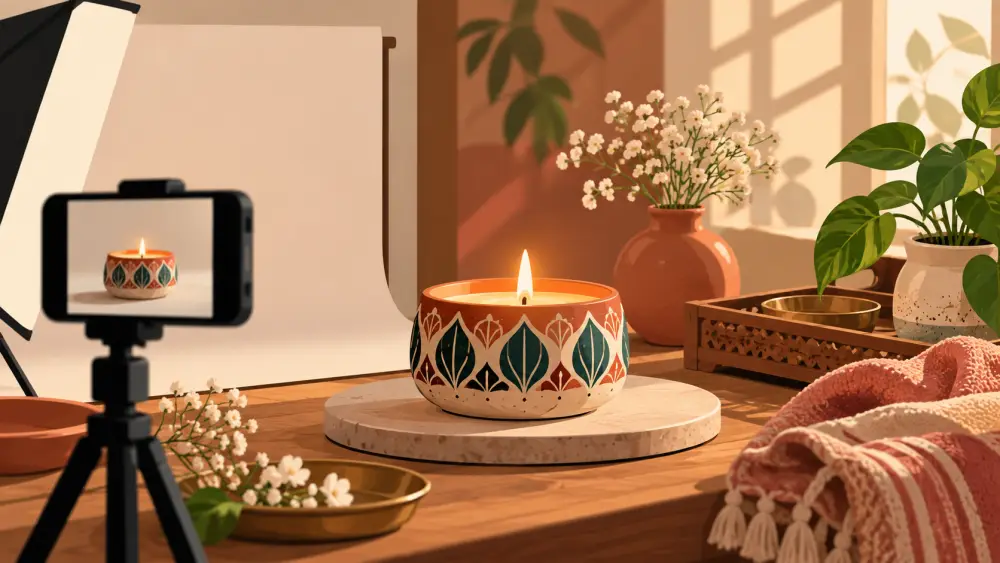
A candle, a vase or a wall hanging is rarely bought for what it is alone. It is bought for how it will look in a room. Your photos need to do two jobs: show the item clearly and help a buyer picture it at home.
Start with a clean product shot
Begin with the item alone against a plain backdrop, in even daylight from a window. This is the shot that tells the buyer exactly what they get, and it is the one usually used as the main image. Keep the camera level and fill the frame without cropping off edges. For round candles and vases, check that the item does not look tilted.
Add a context shot
Next, place the item in a real setting: a shelf, a side table, a windowsill, a bedside. Use things you already own, such as a book, a small plant or a tray. Keep the arrangement simple so the product is the clear star. A tidy, uncluttered corner reads better than a heavily styled one, and it is also easier to repeat across products.
Show scale
Buyers cannot judge size from a photo of a single object. Put it beside something familiar, like a hand, a book or a cup, so the size is obvious. State the measurements in the description as well, and see how to show product size in photos for a fuller approach.
Lit versus unlit candles
For candles, take at least one unlit shot that shows the colour, wax finish and label clearly. A lit shot can show mood, since the glow of a flame draws the eye. If you take one, do it in a dim room with the candle in a stable spot, away from fabric, paper and anything that could catch fire, and never leave a flame unattended. Blow it out between shots. Do not suggest in your photos or text any burn time or safety claim you have not tested and can stand behind.
- Shoot the unlit candle first, because wax can drip or smoke after burning.
- Take lit photos last, with a steady phone, since low light slows the camera and blurs movement.
- Wipe soot or wax drips from the container before the next shot.
Handle colour carefully
Warm candle light shifts how everything looks, so if the product colour matters, keep the main image under daylight. A lit scene is a mood shot, not a colour reference. For more on keeping colours true, see how to fix a colour cast in product photos.
Use a consistent look
Keep the backdrop, the type of surface and the light direction the same across the catalogue. A buyer scrolling through candles and decor should feel the whole collection belongs together. The thinking behind a tidy catalogue is in photographing products on a phone, and if you are selling in this space, how to start selling candles online and how to start selling home decor online cover the launch side.
A small shot list
- The item alone, front-on.
- A closer detail of finish or texture.
- The item in a room-style setting.
- A scale shot with a familiar object.
- For candles, an optional lit mood shot.
Check every photo at full size before you keep it, for dust, fingerprints and stray wax.