
How do I include care instructions with an order?
A small card in the parcel can save you messages, returns and unhappy reviews; here is a simple layout and how to write it for different kinds of products.
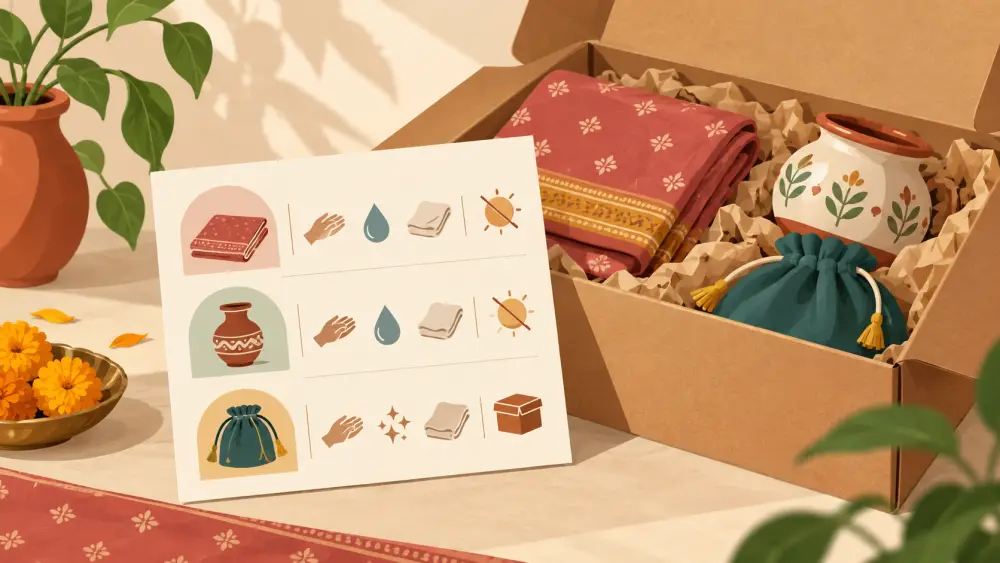
Why a care card is worth the few rupees
Most "my product got spoiled" messages are not about a bad product. They are about a customer who did not know how to use or store it. A care card answers the question before it is asked, and it tells the customer you know your craft.
It does not need design skills. A card the size of a visiting card, printed on ordinary paper and cut by hand, does the job.
What goes on the card
Keep it to five short lines at most. Customers will not read a paragraph while holding a parcel.
- The product name, so the card is not mistaken for a flyer
- Two or three do and don't lines
- How to store it
- One line on what is normal, such as slight colour variation in handmade items
- Your WhatsApp number or Instagram handle for questions
Write only what you have tested
Care advice must come from your own experience of the product, from your supplier, or from the label on the raw material. If you are not sure whether a fabric can take a machine wash, do not guess. Wash a spare piece yourself, note what happened, and write exactly that. A wrong care line can ruin a customer's purchase and then it is your problem.
If you buy finished goods from a supplier, ask them for the care instructions in writing and reuse their wording.
A layout for different product types
Think in terms of what can go wrong with each kind of product.
- Textiles and garments: wash method, drying, ironing, and whether the first wash should be separate
- Candles and wax items: where to place them, trimming the wick, never leaving a flame unattended
- Jewellery: keeping it dry, storing pieces apart so they do not scratch
- Wooden or leather items: keeping away from damp, how to clean a dusty surface
- Food items: storage place, how long it keeps once opened, what to do if it is kept in a hot room
- Skincare: how to patch test, where to store the bottle, a note to stop use and consult a doctor if there is irritation
For food and skincare, shelf life and safety statements need to be accurate, so check what applies to your product with the relevant authority or a professional rather than relying on a card template.
Where to place it
Put the card on top of the product, under the lid or tissue, so it is the first thing seen when the box opens. If you also add a thank-you line on the back, the card does two jobs at once.
You can also write the same care lines in the product description on your store page, so a buyer sees them before ordering. Fewer surprises means fewer returns, a topic we cover in cancellations, refunds and restocking.
Make the card part of your packing routine
Print a batch of fifty, keep them next to the tape and bubble wrap, and slip one into every order. If you change the product, change the card at once and throw the old stack away. Mixing up cards between products is worse than having none.
For ideas on the box itself, read choosing packaging material for small sellers. And if a care question does turn into a complaint, the way you reply matters as much as the card; see how to apologise for a shipping mistake.
A last check before you print
Read the card as if you were a first-time buyer. Is there any word that needs explaining? Is every line something the customer can actually do at home? Ask a friend who has never used your product to follow the card and tell you where they got stuck. Fix those spots, then print.