
Should I cost my stock by FIFO or average cost?
When you buy the same item at two prices, FIFO and average cost give different profit figures, and a small example shows why.
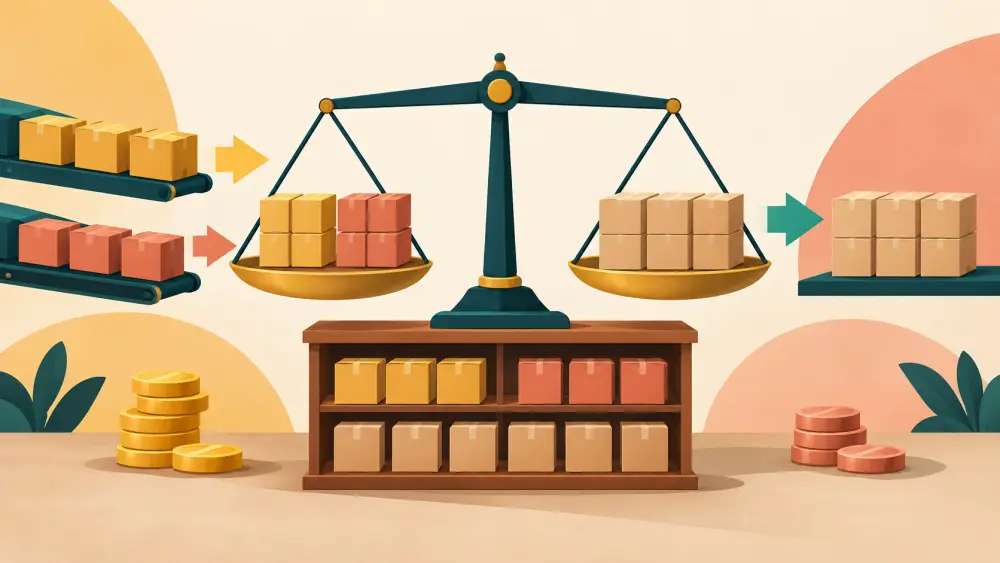
You bought 50 units at Rs 100 last month and another 50 at Rs 120 this month, because your supplier raised the price. Now you sell 60 units. What did those 60 units cost you? The answer depends on the method you use to count, and it changes your reported profit.
FIFO in plain words
FIFO means first in, first out. You assume the oldest stock sells first. This usually matches how many sellers actually pack, and it is easy to understand.
Here the first 50 sold come from the Rs 100 batch, which is 50 times Rs 100, or Rs 5,000. The next 10 come from the Rs 120 batch, which is 10 times Rs 120, or Rs 1,200.
FIFO cost of the 60 units sold is Rs 5,000 plus Rs 1,200, which is Rs 6,200.
Average cost in plain words
With average cost you blend all the purchases into one price per unit. Total spent is Rs 5,000 plus Rs 6,000, which is Rs 11,000. Divide by 100 units to get Rs 110 each.
Sixty units at Rs 110 is Rs 6,600.
The difference
FIFO says cost of goods sold is Rs 6,200. Average says Rs 6,600. The gap is Rs 400, so reported profit is Rs 400 higher with FIFO whenever prices are rising.
If you sell the 60 units at Rs 200 each, revenue is Rs 12,000. Profit is Rs 5,800 on FIFO and Rs 5,400 on average cost. Same sales, same bank balance, different profit on paper.
What about the stock still on the shelf?
You have 40 units left. Under FIFO they are all from the Rs 120 batch, so they are valued at Rs 4,800. Under average cost they are valued at 40 times Rs 110, which is Rs 4,400.
Add it up. FIFO: Rs 6,200 plus Rs 4,800 is Rs 11,000. Average: Rs 6,600 plus Rs 4,400 is also Rs 11,000. Over the whole life of the stock, both methods agree. They only split the same total differently between what was sold and what remains.
Which should you use?
For a small seller, the practical answer is the one you can keep up every week without mistakes.
- Average cost is simpler if you buy the same item repeatedly at changing prices and do not keep batch records. It also smooths out price jumps.
- FIFO suits you if you keep batches separate, for example because of expiry dates, and it tracks what is physically happening on the shelf.
Whichever you choose, use it consistently, and do not switch back and forth to flatter a month. For tax and accounting books, the accepted method and any rules about changing it are a question for your CA, so ask before you settle.
Using it in pricing
Cost per unit feeds into your price. If your cost went from Rs 100 to Rs 120, new prices must reflect the newer cost, whatever your accounting method says about the old stock. A supplier price rise and your new selling price works through that. To get the full cost of one unit including freight and charges, see landed cost per unit explained.
Keep the purchase records of each batch, with date, quantity and rate. That one habit makes either method easy.