
Why copying supplier product descriptions hurts your store
Pasting a supplier's text is quick, but it leaves your store looking identical to others, can be inaccurate and weakens trust. Here is what to do instead.
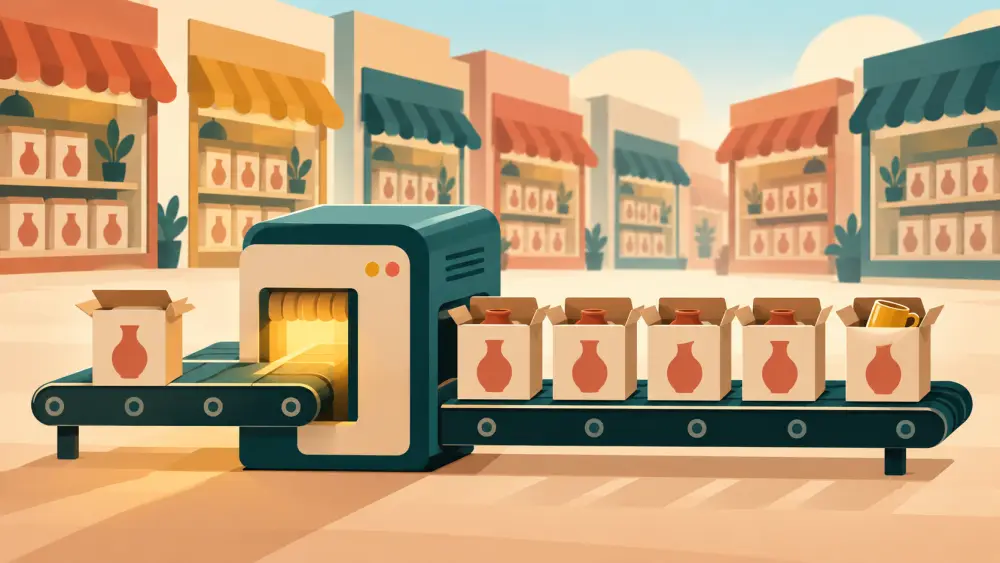
When you source products from a supplier or wholesaler, a ready-made description is right there. Copy, paste, publish. It saves time on day one. The cost shows up later, in ways that are easy to miss.
Reason one: your store looks like everyone else's
If the same paragraph appears word for word on ten other stores, a shopper comparing them sees no difference. Nothing signals that your brand is a particular person with a point of view. A small brand's biggest advantage is that it can sound like itself; copied text throws that away.
Reason two: it may not describe your exact product
Supplier text is written for the supplier's catalogue, often covering several versions or batches. It may mention a colour you do not stock, a size you do not carry or a material that varies by shipment. If your customer reads one thing and receives another, that is a mismatch you have to deal with, and it can lead to returns. Always check the real item against the words. See returns and RTO: the numbers nobody tells you.
Reason three: claims you cannot stand behind
Suppliers often use strong claims such as "waterproof", "pure" or "best quality". If you repeat them without testing, you are the one answering when a customer complains. Read avoiding exaggerated claims in product descriptions before you reuse any line.
Reason four: trust
Customers notice when text sounds generic or when it does not match photos. A description that feels borrowed can make the whole store seem less personal. Part of what earns trust for a small brand is the sense that a real person looked at the product, as covered in building trust without a big marketing budget.
I am not claiming copying causes a drop in search results or any specific penalty. The reasons above are enough on their own.
Also, it may not be yours to copy
Descriptions and photos can belong to the supplier or the original brand. If you are unsure whether you may reuse them, ask the supplier or take advice rather than assuming.
How to rewrite quickly
You do not need to start from nothing. Use the supplier text only as a source of facts:
- Pull out the facts: material, size, weight, contents.
- Check each fact against the real product in your hand.
- Write a short opening line in your own words.
- Add bullets using your checked facts.
- Add what you know from using it: how it feels, how it fits, what customers ask.
A reusable layout helps; see a reusable product description template.
Take your own photos
The same logic applies to images. Your own photos show the real item and make your page look distinct. A phone and some daylight are enough to start, as explained in photographing products on a phone.
Make time for the best sellers first
If you have a large list, start with your top few products, the ones most people look at, and rewrite those. Then work through the rest over time. A catalogue that is a little smaller but carefully described tends to feel better than a big one with pasted text, which is also the idea behind the case for a smaller catalogue.