
You don't own your customers on a marketplace
A marketplace sale is a transaction with the platform's customer, not yours, and that difference shapes everything about how your brand can grow.
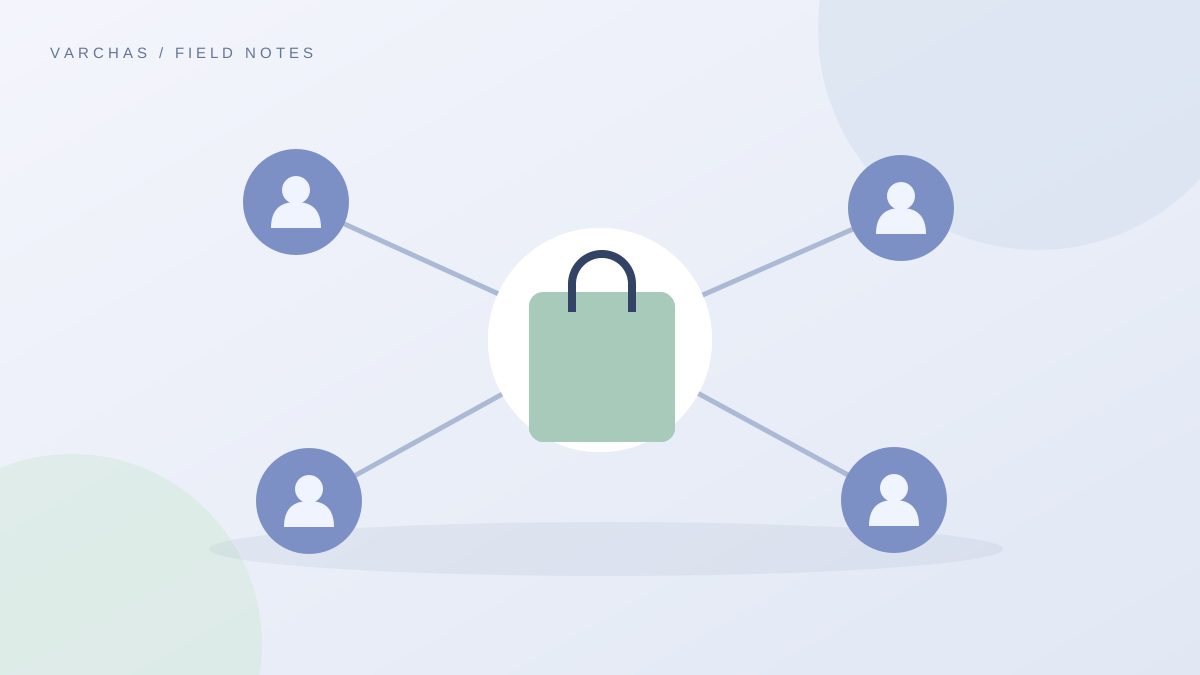
Ask a founder selling on a marketplace who their best customer is, and most cannot answer beyond "someone who bought the green earrings twice." That is not a failure of memory. It is a design choice made by the marketplace, which treats the shopper as its customer and you as a supplier fulfilling an order. You made the product, packed it, and probably answered a question about it, but the relationship with the person who bought it belongs to the platform.
What "not owning" actually means
On most marketplaces, you cannot see a customer's phone number or email in a form you can reuse. You cannot message them outside the platform. You often cannot even tell if the same person has bought from you three times or if three different people happened to buy the same product. The order history, the loyalty, the pattern - all of it sits inside the platform's systems, visible to the platform, not to you.
This is by design, not an oversight. A marketplace's business depends on the shopper coming back to the marketplace, not to your brand directly. Every feature that would let you build a direct relationship with your own customer works against that goal, so most marketplaces simply do not offer it.
Why this quietly caps your growth
A brand that cannot identify its repeat customers cannot do the things that make small brands genuinely profitable: notify past buyers of a new collection, offer a returning customer something better than a stranger gets, or simply say thank you in a way that means something. All of that depends on knowing who your customers are, and a marketplace structurally prevents it.
This is closely tied to why the repeat customer is the whole business for a small brand - if you cannot reach your repeat customers directly, you cannot build the part of the business that actually compounds over time.
The switching cost works against you, not for you
If a customer who loves your product searches for it again next season, they will likely search on the marketplace, not for your brand name. If a competitor undercuts your price by a small margin on the same listing page, the platform will often show that competitor first. You built the loyalty; the platform decides who gets to benefit from it on the next purchase.
This is a fundamentally different arrangement from a customer bookmarking your own store or following you on WhatsApp. In that case, when they think of you, they come to you directly, with no algorithm deciding whether you get shown to them again.
What owning a customer relationship actually enables
When a customer buys through your own store, you know their name, their number, their order history, and you can reach them again without paying anyone for the privilege. This is what makes email and WhatsApp follow-ups possible - see why email still wins for repeat sales for more on this. It is also what makes a festive season push work, because you are messaging people who already know and like your brand, rather than hoping to be discovered again from scratch.
None of this requires abandoning marketplaces as a discovery channel. It requires building a second channel - your own store - where every sale adds a name to a list you actually control, rather than a data point the platform keeps to itself.
- 1A good first experience
- 2A useful follow-up
- 3An easy return visit
- 4Another reason to buy
A concrete first step
If you sell on a marketplace today, try this: pick a product you have sold at least twenty times there, and ask yourself how many of those twenty customers you could message today if you wanted to tell them about a new arrival. If the honest answer is close to zero, that is the exact gap a store of your own closes. Setting one up alongside your marketplace listings, with UPI and Cash on Delivery so nothing about how customers pay has to change, is worth exploring at early access.