
What to message customers at each stage of shipping
Five short messages, from order confirmed to delivered, answer most of the questions customers would otherwise send you. Here is what each one should say and why.
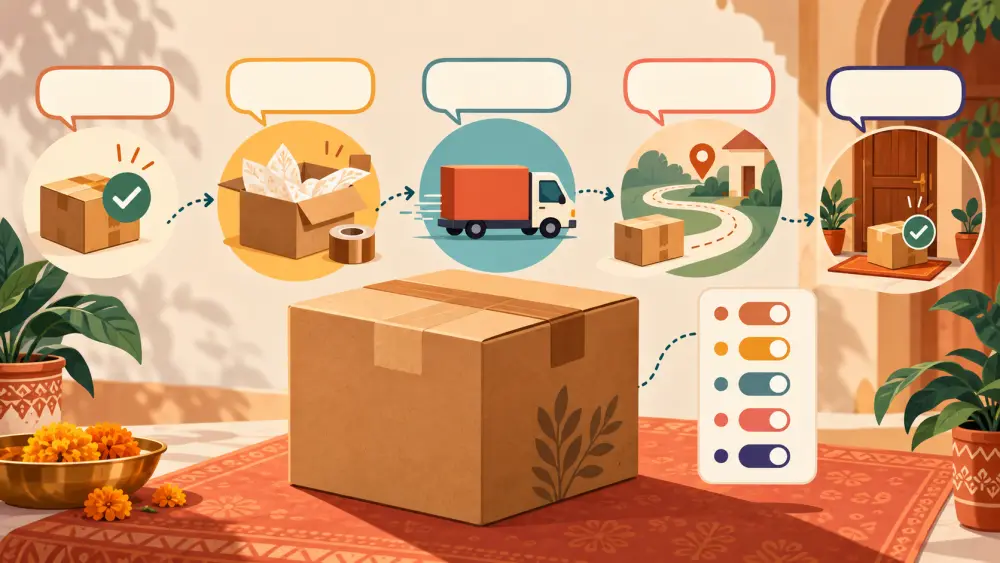
A parcel's journey has a few clear moments, and the customer wonders at every one of them. If you speak up at each point, you answer the question before it is asked. You do not need long messages. You need the right short message at the right time.
Whether any of these go out by themselves depends on how you have set up your store and your tools, so check what is actually being sent before you assume anything. Where nothing goes out automatically, you can send them by hand or keep them as saved replies.
Stage one, order confirmed
This is the first reassurance. The customer has paid or placed a COD order and wants to know it landed.
What to include: the order number, what they ordered, the address you have, and what happens next. Add the dispatch time you expect, in honest terms. If you need to confirm details, such as size or spelling on a custom item, ask now rather than later.
Stage two, packed
This one is optional but loved by customers. A short "your order is packed and ready for pickup" tells them you are working on it. A photo of the neat parcel can add a personal feel. Skip it if your volume makes it impractical, since this is the message most likely to be dropped on a busy day.
Stage three, shipped
This is the most important message. It should contain:
- the courier or service name, only if you want to give it,
- the tracking number or link,
- a realistic expectation of the delivery window,
- what to do if something looks wrong.
Send it as soon as you hand over the parcel. For how to share the link in a way that stops follow-up questions, read How to share tracking details so customers stop asking.
Stage four, out for delivery
Customers appreciate a nudge that the parcel is close. A one-line note such as "Your parcel is expected to reach you today, please keep your phone nearby" helps, especially for COD orders where someone must be present with cash. This message also reduces refused deliveries, a cost covered in The cost of one refused COD order.
Only send it when you can see the status. If you cannot check each parcel, a general note in the shipped message is enough.
Stage five, delivered
Close the loop. Confirm it was delivered, thank them, and invite them to write if anything is not right. Keep the invitation about problems first. A request for a review can come a few days later, once they have used the product. Do not ask for a review in the same breath as an apology or while the parcel is still unopened.
Keep a single tone
All five messages should sound like they came from the same person. Use the customer's name, keep sentences short and avoid too many exclamation marks. Say the same things in the same order each time, so customers learn what to expect from you.
What if something goes wrong between stages
If the parcel stalls, do not wait for the next scheduled message. Write to the customer with an honest update. What to say to a customer when an order is delayed gives you the ingredients.
Make it easy on yourself
Write the five messages once, store them as saved replies, and adjust the details each time. If you track orders in a sheet, add a column for the last message sent, so nothing falls between the cracks. This small system turns shipping updates from a daily worry into a habit.