
Is a low-priced sample pack worth selling at a loss?
A sample pack sold below cost is really a marketing expense, and a short payback calculation shows how many buyers must go on to a full order for it to work.
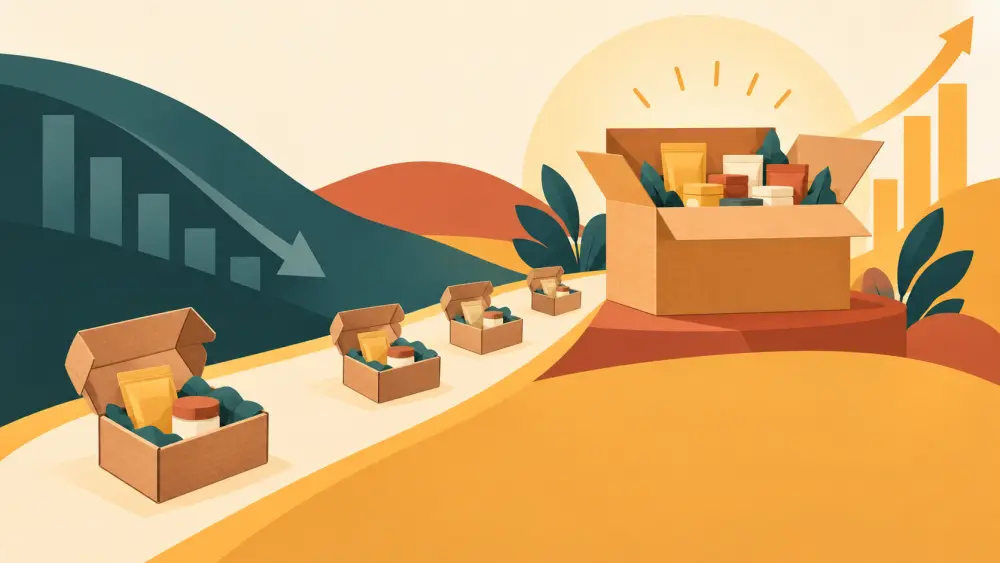
Sample packs are a classic way to win a hesitant customer. Tea, skincare, spices, snacks and perfumes all use them. The sample costs you real money, though, and when you sell it for less than it costs, you are deliberately buying a customer. That can be smart or wasteful, and the difference is one division.
What a sample really costs
Count everything, not just the product. Suppose one sample pack costs you Rs 90 all in: a small amount of product, a pouch, a label, a share of shipping and the payment fee. Use your own figures.
You sell it for Rs 49. Loss per sample: Rs 90 minus Rs 49, which is Rs 41.
The conversion that matters
The sample only pays off if some buyers come back for the full product. Say one in four sample buyers goes on to place a full order that earns you Rs 200 in profit.
Take four sample buyers:
- Sample losses: 4 times Rs 41, which is Rs 164.
- One full order: Rs 200 profit.
- Net: Rs 200 minus Rs 164, which is Rs 36 ahead.
At one in four, the sample pays for itself with a little left over.
What if fewer convert?
Change the conversion and watch the answer move. Take ten sample buyers instead.
- If two convert: losses are 10 times Rs 41, which is Rs 410. Two full orders earn Rs 400. Net: a loss of Rs 10.
- If one converts: losses are Rs 410 and you earn Rs 200. Net: a loss of Rs 210.
The break-even point sits a little over two conversions in ten. Below that, the sample is a cost without a return. I cannot tell you what conversion your samples will achieve. Run a small batch first and count.
Break-even rule of thumb
Divide the loss per sample by the profit of a full order. Rs 41 divided by Rs 200 is 0.205. That means roughly one in five sample buyers must convert for you to break even on that order alone. The one-in-four figure above clears that bar. If your profit per full order is lower, the required conversion rises.
Ways to improve the odds
- Include a clear next step in the sample parcel, such as a reorder card or a code for the full-size product.
- Collect an email or WhatsApp number at purchase, with consent, so you can follow up. See building an email list from day one.
- Limit one sample per customer so you are not funding repeat sampling.
- Price the sample at cost if you want a cleaner test. At Rs 90, you lose nothing per sample and each conversion is pure gain.
- Keep the sample genuinely good. A weak sample loses sales that no coupon will rescue.
Think about the repeat value
The Rs 200 profit above counts one full order. A customer who keeps buying is worth more, which is why sampling makes sense for repeat products. Our post on why the repeat customer is the whole business makes the case, and free first-order shipping payback runs the same calculation for a different welcome offer.
Conclusion
A sample pack sold at a loss is acceptable only when you know the conversion it needs. Work out the loss per sample, divide by profit per full order, and compare with what your own customers actually do. If the numbers do not work, raise the sample price, shrink its cost or find a cheaper way to introduce your product.