
How to pack tote bags so they reach the customer safely
Tote bags are soft, so the real risks are creasing, dirt and damp. Here is a simple fold-and-seal routine for packing them compactly.
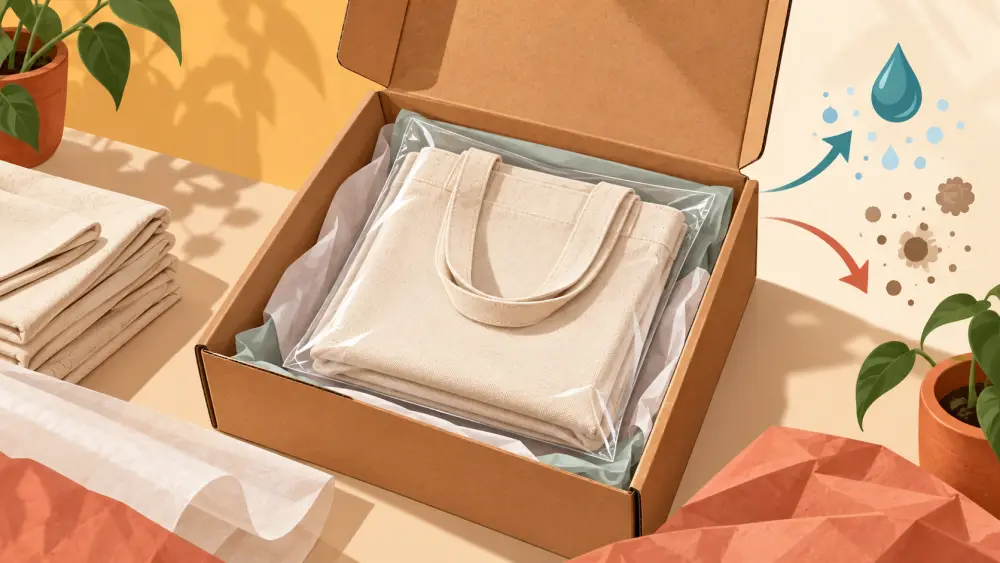
A tote bag is one of the easier things to ship. It will not shatter, and it does not leak. What can go wrong is quieter: a crushed, creased bag, a smudge from the outer carton, or a musty smell after days in a damp transit hub. Packing is mostly about keeping the bag clean, dry and neat.
Fold it the same way every time
Lay the bag flat, handles straight. Fold the handles down over the body, then fold the bag in thirds or in half, depending on size. A compact, flat rectangle is easier to pack and cheaper to carry around your own table. Pick one fold and stick to it. When you pack twenty bags in a row, a fixed fold means every customer opens a bag that looks the same.
If the bag has a printed or embroidered front, fold so the print is on the inside of the fold or lies flat on top, not pressed into a hard edge. Sharp folds on a print can leave a visible line, especially on stiff canvas.
Protect against moisture first
Moisture is the main enemy of fabric in transit. A plain paper wrap is not enough. Slide the folded bag into a clear poly bag and seal it. If you do not have a self-seal bag, a regular one with tape across the opening works. Squeeze out extra air before sealing so the pack stays flat.
Do this even if the bag is dry when you pack it. You cannot control the weather, the truck or the warehouse.
Add a little structure, not a lot
A soft pack can bend, but a bag with a stiff printed panel or a zip can mark. Place a flat piece of cardboard, cut slightly smaller than the folded bag, behind the print. It keeps the bag from curling and gives the outer pack a firm face. For a heavily printed tote, a sheet of tissue paper between the print and the poly bag stops ink or patterned surfaces from sticking to the plastic in hot weather.
Choose the outer pack to match
- A single bag: a courier flyer or padded mailer is usually enough. Fit the poly-wrapped bag snugly so it does not slide around.
- Two or three bags: stack them with tissue between prints and use one slightly larger mailer.
- A bag with metal rivets, a rigid base or a zip pull: add a card layer around those parts so they do not mark the fabric.
Do not use a box far bigger than the bag. Empty space lets the bag shift, and it makes the pack harder to handle.
Seal and label cleanly
Run tape across every seam of the outer pack. Keep the address label flat on one face, not folded over an edge, and avoid putting it over a seam where it may peel. Add your name and a small slip inside with the order number, so a loose pack can still be matched to the order.
Add a care note
A small card with washing and ironing guidance fits flat inside the pack. See how to write care instructions for your products for what to put on it. Care advice also cuts down avoidable complaints about shrinking or fading.
Check before you hand it over
Before the courier collects, do a short routine. Is the poly bag sealed? Is the print protected? Is the label readable? Is the order number inside? Photograph the packed parcel once. If a customer later says the bag arrived damaged, the photo shows how it left you.
For more on the shipping side, shipping across India: what small brands should know is a good next read. If bags are your main category, how to photograph bags and wallets also helps the listing match what you pack.
Packaging does not need to be fancy. A tidy fold, a sealed poly bag, a small stiffener and a snug outer pack are enough to get a tote bag to a customer looking the way it looked in your photos.