
Can you ship plants by courier and how do you pack them?
What sellers should think about before shipping plants, and general packing ideas that reduce stress on live products without promising survival.
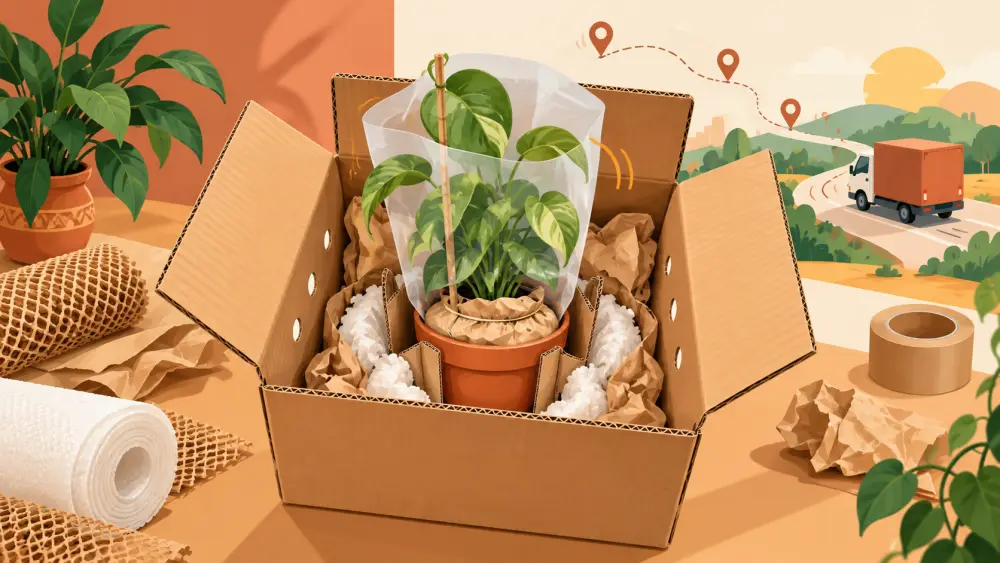
Plants are one of the hardest things to ship. They are alive, they need air, and they do not do well when they are squeezed, shaken or left in a dark box for days. Many small sellers still sell plants successfully, but only after thinking carefully about what can go wrong.
First, ask whether you should ship at all
Before you pack anything, consider how long your parcels usually take to reach customers. Every extra day in a box is a day the plant is without light and fresh air. Short, predictable routes are kinder to plants than long, uncertain ones.
You also need to be honest about what you can promise. You cannot guarantee that a plant will survive transit, and you should not write that on your listing. Some sellers choose to ship only hardy plants, such as succulents or sturdy cuttings, and avoid fragile ones. That is a sensible approach for a new seller.
Rules about moving plants between states may apply, and they can change. Check with the relevant local authority or a trusted source before you ship across state lines, rather than assuming it is fine.
Prepare the plant
- Water lightly a day or so before packing so the soil is slightly moist, not soaked. Wet soil adds weight and can spill and rot roots.
- Remove dead leaves and damaged parts.
- Trim long growth that will bend or break in the box.
Keep the soil in place
Loose soil is the most common mess. Options include:
- Wrapping the base of the pot in a plastic bag or cling film and tying it snugly.
- Pressing a layer of damp paper or moss over the soil and holding it with a small piece of tape.
- Using a plain plastic nursery pot rather than a fancy ceramic one, because ceramic breaks and adds weight.
For bare-root plants or cuttings, wrap the roots in damp newspaper or moss and then place them in a thin plastic cover so moisture stays inside without making a puddle.
Support the leaves and stems
Plants bend easily. Gently wrap the foliage in soft paper so it does not rub. A loose cone of paper around the top keeps leaves from catching on the box edges. Do not tie leaves tight, because that can crush them.
Choose a box that holds the plant upright
The box should be tall enough that the plant is not squeezed but narrow enough that it cannot tip. Fill the empty space around the pot with crumpled paper. Cut a few small air holes if your courier allows it. If you are unsure, ask them before you start.
Mark the box with arrows showing which side is up. It may or may not be followed, but it costs nothing.
Do not ship at the wrong time
Avoid sending plants just before a weekend, a long holiday or at a time when your courier is already behind. A parcel that sits in a warehouse for two extra days is a bigger risk than any packing mistake.
Set expectations in writing
Tell customers on your listing that plants are living products, that transit can be stressful, and that some leaf loss or drooping is possible. Explain what to do on arrival, such as unpacking right away and placing the plant in indirect light. A short care card in the box helps; our guide on how to write care instructions for your products can help you draft one.
Decide your policy before the first problem
Think about what you will do if a plant arrives dead or badly damaged. You might offer a photo-based replacement or a refund. Whatever you choose, decide it in advance. The post on cancellations, refunds and restocking is a useful guide to thinking through those rules.
If you are just starting out in this category, read how to start selling plants online in India next.