
How to pack leather goods so they reach the customer safely
Leather rarely breaks, but it dents, creases and picks up scuffs in transit. Stuffing and wrapping are what keep the shape and finish intact.
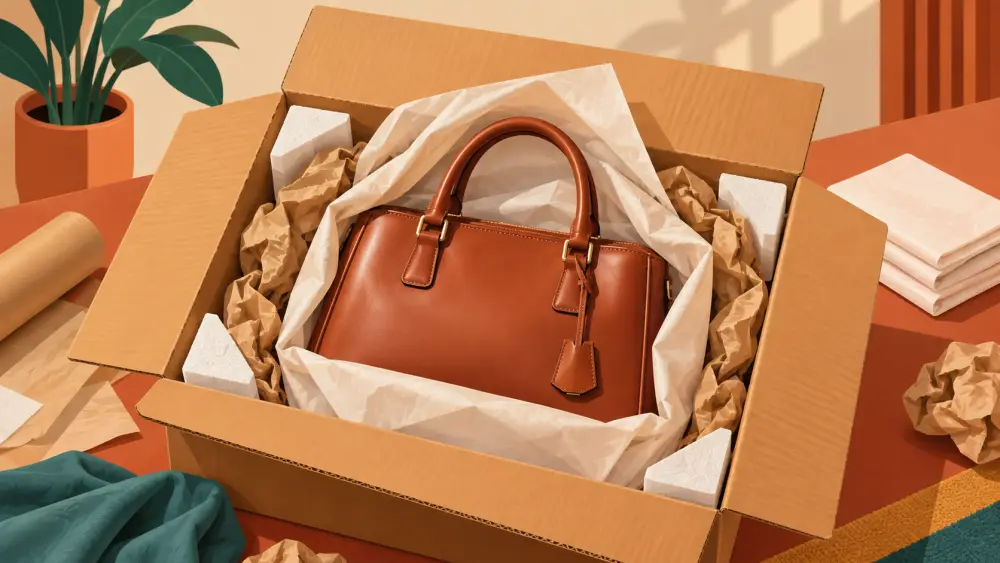
Leather is tough, yet a bag that arrives squashed or a wallet with a rub mark on the front feels like a damaged product to the buyer. The material remembers pressure. A crease from a tight fold can stay for weeks. So the job of your packing is to keep the shape, and keep surfaces from touching anything rough.
Stuff bags so they hold their shape
Any structured bag, such as a satchel, a tote or a sling, should travel filled. Use tissue paper, clean paper scrunched loosely, or a soft cloth. Fill the main compartment until the walls stand up gently, but do not stretch the leather. Overstuffing can pull at seams and distort the body. Fill corners first, because that is where bags cave in.
Small pockets and zip pouches can hold a folded piece of tissue as well. Tell the customer on a small card that the stuffing is only for transit and can be removed.
Wrap the surface, not just the outside
Leather can mark against other leather, against zips and against cardboard. Wrap each piece in acid-free tissue or a soft cotton bag first. A dust bag with your brand name printed or stamped on it is a nice touch and also does real work, because it keeps the finish from rubbing against the box.
If the product has metal hardware, place a thin fold of tissue between the metal and the leather so a buckle or zip pull does not press a mark into the surface.
Keep wallets, belts and straps flat or rolled gently
- Wallets and card holders can lie flat. Put a piece of thin card on each side so they do not bend.
- Belts are best rolled loosely with the buckle on the outside layer, then tucked into tissue. A tight coil leaves a curve that is hard to remove.
- Long straps should not be folded sharply. A wide, soft loop is safer.
Protect against damp
Leather and moisture do not mix, especially in humid cities and during monsoon months. After the soft wrap, slide the item into a sealable poly bag, squeezing out most of the air. This stops damp from reaching the surface and stops mould smells from developing during the transit. Add one small sachet of silica gel if you already use it for other products, otherwise a good seal is a fair start.
Choose a box that does not flex
A sturdy corrugated box beats a soft mailer for structured bags. Pick a box where the wrapped bag fits snugly with about a thumb of room, then fill any gap with paper so nothing slides. For wallets and belts, a rigid mailer or a small box is better than a flexible envelope.
Label and seal with care
Write the order number and the customer's name on the outer pack, and tape all seams. Avoid pressing a label on the leather or the dust bag directly. If you want to include care instructions, print them on a small card, and see our guide to writing care instructions for what to say.
Do a quick check before you hand over
Look at the item under good light. If there is a scuff, wipe gently or choose another piece. Take a photo of the packed parcel before sealing, which helps if a dispute arises later, as discussed in cancellations, refunds and restocking.
Good packing is part of the product. When the bag arrives holding its shape, with a clean finish and a tidy wrap, the customer starts the relationship pleased, and you spend less time answering messages about dents and marks.