
How to pack jewellery so it does not tangle or scratch
Pouches, small boxes and card holders inside a padded mailer, with a layer-by-layer way to stop chains tangling and stones rubbing in transit.
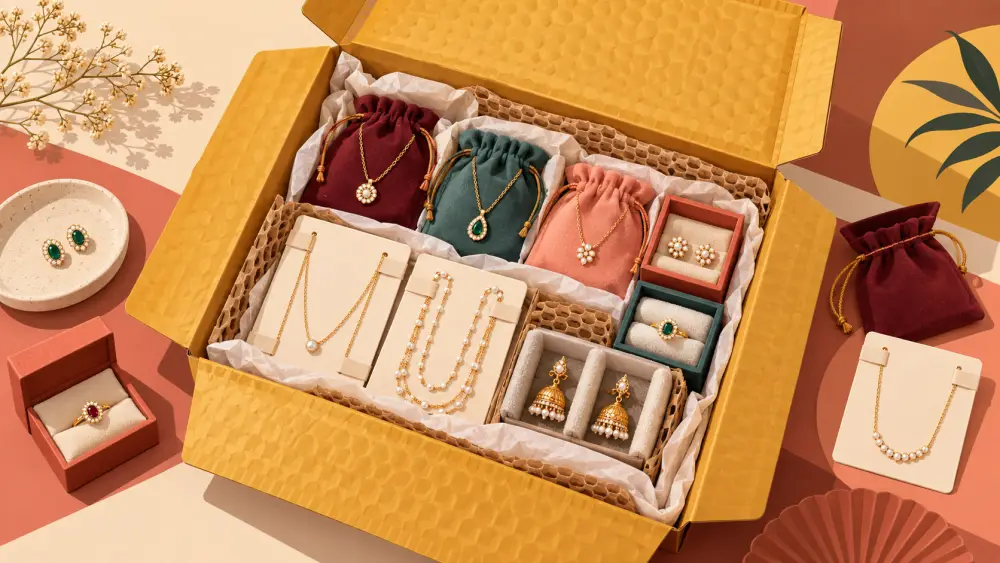
Jewellery is small, which makes it easy to pack carelessly. A chain thrown into a polybag arrives knotted. Earrings dropped into a loose pouch scratch each other. The cost is not in the material but in the customer's first impression.
Think in layers
Good jewellery packing has three layers, each with a different job.
- The holder keeps the piece still and separate from other pieces.
- The inner container, such as a pouch or box, protects against rubbing.
- The outer mailer absorbs knocks.
If any layer fails, the next one should still limit the damage.
Chains and necklaces
Chains tangle because they have room to move. Fix that by pinning the chain flat.
- Thread a necklace through a slit in a piece of stiff card, or tape the ends to the card so it lies straight.
- Use a small drinking straw for very fine chains: thread the chain through and fasten the clasp over the ends.
- Keep pendants on top of the card, not tucked behind it, so they do not press into the chain.
Each necklace gets its own holder. Never put two in the same pouch.
Earrings, rings and studs
Earring cards are cheap and effective. Push the posts through the card and fix the backs on, then slip the card into a small clear bag. For hoops and jhumkas, a little tissue behind the hanging parts stops them swinging into each other.
For rings, a small foam slot or a tiny box with a cotton pad keeps them upright. Loose rings in a pouch will rub on each other and dull plated surfaces.
Stones and plated pieces
Stones can chip if they hit something hard, and plating wears faster with friction. Put a small piece of soft tissue or a thin cloth between the surface of the piece and the container. Do not use rough paper that scratches. If the piece has oxidised or antique finishes, keep it away from perfumed items or anything that might leave residue.
Choose the inner container wisely
- A soft pouch is fine for single, low-risk items such as plain bangles.
- A small box is better for anything with stones, or with a delicate shape.
- Keep sizes snug. A tiny piece in a big box slides around, which defeats the purpose.
If you sell sets, use one inner container per piece or use dividers inside a larger box. Do not drop the whole set loosely into one bag.
Then the outer mailer
Place the boxed or pouched jewellery in a padded mailer or a small carton with a bit of filler on the sides. The goal is that if you gently shake the closed parcel, nothing rattles. If you can hear movement, add paper or bubble wrap until the sound stops.
Seal the mailer fully and place the invoice or card on top so the customer sees it first and does not have to pull jewellery out to find it. If a small piece still moves around, tighten the inner container before adding more outer padding.
Keep it presentable
Small touches matter in this category. A tidy card with the product name, a tiny care slip and a clean pouch make a modest piece feel considered. For care wording, see how to write care instructions for your products, which also helps you cut down on complaints about tarnish.
Keep proof, skip the promises
Take a photo of the piece in its holder and another of the closed mailer before dispatch. If a customer reports damage, you will have something concrete to review. Avoid making promises about value or cover in your messages unless you have personally checked the terms with your courier.
For a broader look at how packaging cost fits into your pricing, read packaging cost as a percent of price.