
Packing phone accessories and small electronics for courier
Anti-static pouches, snug cushioning and tamper-evident sealing for cables, chargers, earbuds and cases, explained in plain terms for small sellers.
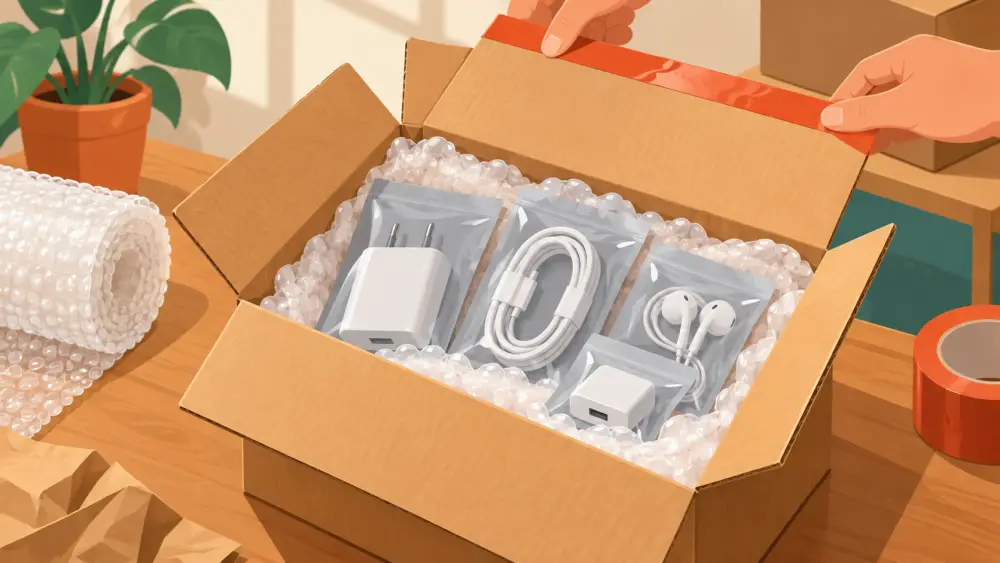
Phone covers, cables, chargers and earbuds look sturdy until they arrive with a cracked casing or a bent connector. Small electronics have a second risk too: buyers worry about getting a used or tampered product. Your packing has to protect the item and also look trustworthy.
Protect against shocks first
The most common damage is from drops and pressure. Plan for both.
- Wrap each product on its own, so two items never touch.
- Add a soft layer such as foam sheet or bubble wrap around the product, with extra at corners and connectors.
- Keep the item snug inside the box. If you shake the closed parcel and hear movement, add padding.
Cables and connectors bend easily, so lay them in a loose coil rather than a tight fold, and keep the connector ends padded.
Use an anti-static pouch where it makes sense
Items with circuitry, such as earbuds, power banks or small gadgets, are often placed in an anti-static pouch. These pouches are designed to reduce static build-up on the surface, which is a general good practice for electronics. Treat the pouch as a sensible extra layer, not as a certificate of anything. Do not claim your packaging meets any particular standard on your listing.
Keep accessories organised
If an order includes a charger, a cable and a case, separate them with a thin card divider or put each in its own small bag. Rubbing metal pins against a phone case can scratch both. Place the item that is easiest to break, such as a glass screen protector, flat and in the middle of the pack, protected by cardboard on both sides.
For screen guards, place the guard between two pieces of stiff card and tape the card edges so the guard cannot slip.
Choose the right outer pack
- Small, light items fit a padded mailer.
- Heavier items, such as power banks or speakers, should go in a corrugated box with a cushion on all sides.
- If a product has its own retail box, put that box inside an outer carton rather than shipping the retail box directly. The brand box is part of the product and should not carry the shipping label.
Seal so it shows if opened
Customers like to know that nobody has opened the parcel before them. You can use tamper-evident tape or a sticker across the flap, which leaves a mark if lifted. A seal on the inner bag also helps. Be clear with yourself that this is a visual aid, not a guarantee of security, and avoid overstating it in your messages.
Include the basics inside
- A printed invoice or order slip.
- A short card with how to contact you for a problem.
- Any warranty details you can honestly honour, written exactly as you have agreed with your supplier.
Do not promise a warranty or return window that you cannot fulfil. If you are unsure about your own policy, see cancellations, refunds and restocking.
Photograph or film your pack
Record a quick clip showing the product, the contents and the sealing of the box before dispatch. If a customer says the item was dead on arrival or incomplete, you have something to look at calmly. Our post on the cost of a damaged-in-transit parcel shows why losing even a low-priced item hurts margins quickly.
Keep cost in view
Foam, pouches and tape cost money. Include them in your pricing so you are not guessing. The packaging cost as a percent of price post shows a simple way to check it.
If you are starting out in this category, how to start selling phone accessories online in India covers the bigger picture.