
How to pack homemade cakes and bakes so they reach the customer safely
Practical packing steps for home bakers shipping cakes and bakes, focused on boxes that keep frosting and shape intact in transit.
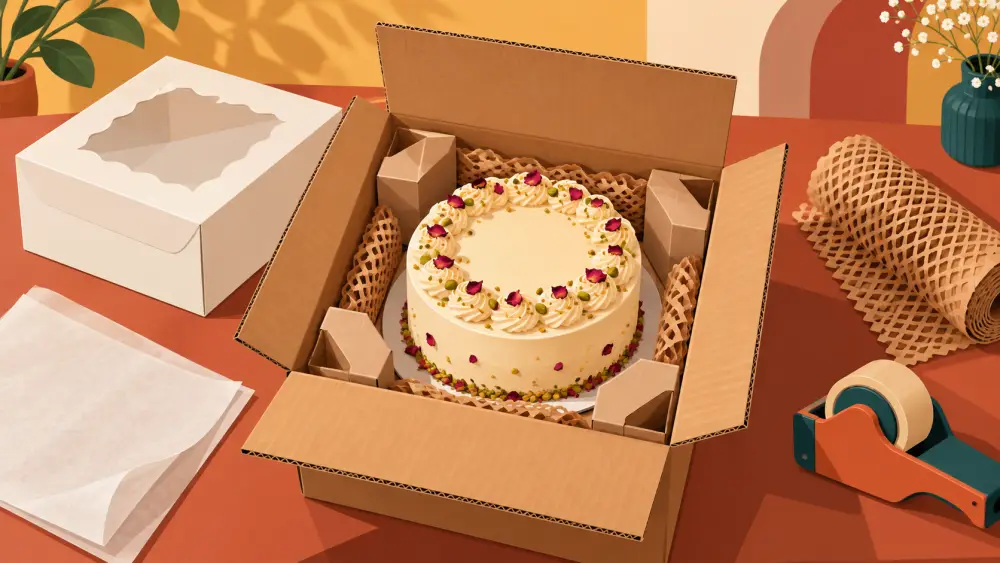
Cakes are the hardest thing a home seller can ship, because they combine softness, weight and a decorated surface that shows every bump. Before you invest in any packing, be honest about what your product can survive. Dry bakes travel well. Frosted, cream-filled and tall cakes need much more care, and some are better kept for local delivery.
Choose bakes that suit the journey
If you are new to shipping, start with the sturdy end of your menu: dense loaf cakes, brownies, cookies, tea cakes and jar cakes. A bake that holds its shape when you tilt the box is a good candidate. Whipped cream, fresh fruit toppings and tall tiered cakes are the products where small knocks turn into complaints. It is fine to say on the listing that a particular cake is available only within your city.
The box does the real work
Use a rigid box that is slightly larger than the cake board, with only a small gap around it. Too much room lets the cake slide. Too little squashes the sides.
Steps that help most:
- Bake and decorate on a firm cake board that fits the base, so the cake never sits directly on a thin card.
- Chill the cake thoroughly before packing so the frosting sets firm.
- Set the board on a non-slip mat, or add a dab of frosting between board and box so it cannot slide.
- Fill any gaps at the sides with folded parchment or crumpled butter paper, snug but not pressing on the frosting.
- Close the lid and make sure nothing touches the top decoration.
Protect the frosting
A plain, smooth finish travels better than tall piped peaks. If the design needs delicate toppers, pack them separately in a small box and tell the customer how to place them. For cream cakes, keep a note on the box about refrigeration. Do not promise a number of hours of freshness unless you have tested it yourself in the weather your customer will have.
Cupcakes and slices
Use a box with inserts that grip each cupcake, or cut a snug cardboard grid. For brownies and cookies, stack in a food-safe tin or box with parchment between layers so they do not stick, then place that inside the outer carton.
Outer carton and labels
Place the cake box inside a slightly larger carton with soft wrapping around it, so a rough drop is cushioned. Mark the outer carton with an arrow for the upright side. Handle with care stickers are cheap and help a little, but do not rely on them.
Write the customer's name and pincode on the carton as well as the label, so a smudged label does not lose the parcel. Our post on shipping across India explains what to keep in mind for distance and delivery times.
Photograph before you seal
Take a quick photo of the packed cake before closing the lid. If a customer says it arrived damaged, you have your own record of how it left you, and you can look at where your packing needs to change. Combine this with a clear refund policy so you handle genuine problems fairly. Cancellations, refunds and restocking covers the basics of handling those cases.
Say what customers should do on arrival
Add a small card: open carefully, keep upright, refrigerate if needed, eat within the time you stated. Tell them to message you with a photo the same day if something is wrong. That one habit keeps small disputes small.
The goal is not perfection but predictability. Choose bakes that suit the trip, fit the box tightly, keep decoration simple and keep records. Over a few orders you will learn which cakes you can ship far and which you should keep local.