
Own your domain, own your brand
A link-in-bio tool and a marketplace listing both borrow your visibility from someone else; a domain with your name on it is the one address that is actually yours.
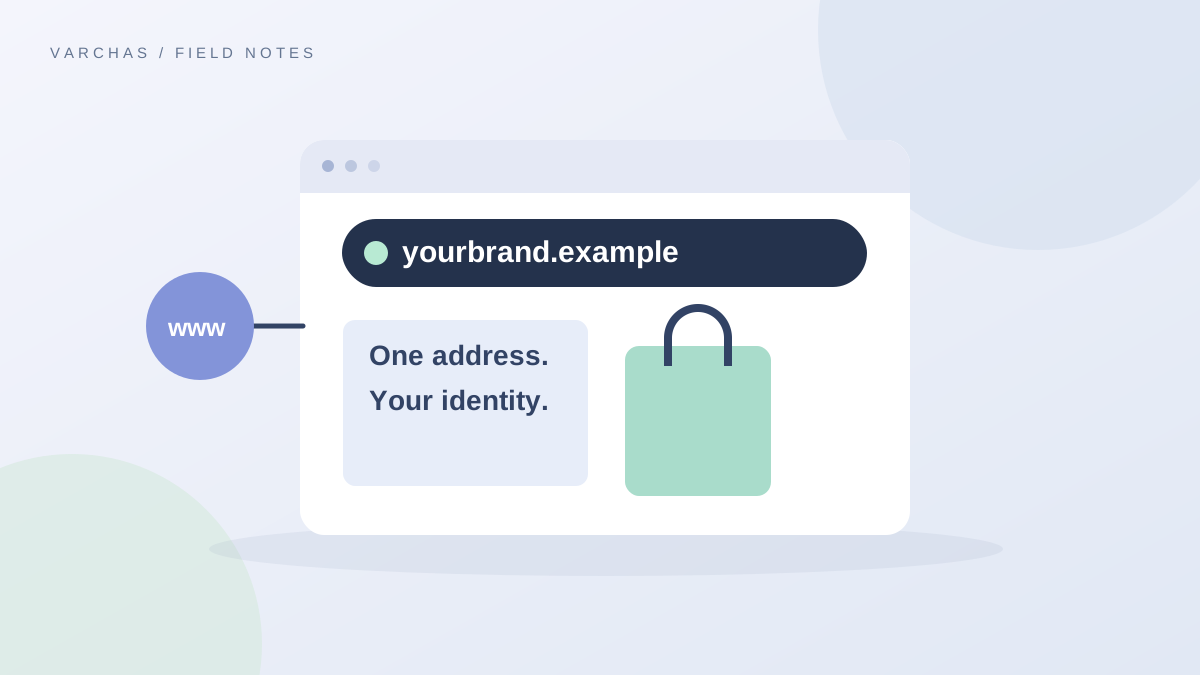
There is a particular kind of vulnerability that most small brands do not notice until it becomes a problem: almost everywhere a customer finds you - a marketplace listing, a link-in-bio page, an Instagram profile - the address itself belongs to someone else's platform, not to you. Your brand name might be in the title, but the URL, the layout, the rules of what you can and cannot do all belong to a company that has no obligation to keep serving your interests.
What "owning" an address actually means
A domain like yourbrand.store or yourbrand.com is registered to you. No platform can change its rules overnight, restrict what you post on it, insert competitor recommendations next to your product, or take it away because of a policy update you did not agree to. This sounds like a small technicality until you consider how much of a small brand's daily reach depends on platforms that can and do change their rules without much warning.
An Instagram account can be restricted or lost to a reporting mistake. A marketplace listing can be deprioritised by an algorithm update. A link-in-bio tool can change its pricing or shut down. A domain you own simply keeps working, under your name, regardless of what any of those platforms decide.
It changes how customers remember you
When a customer wants to find you again, what do they type? If the honest answer is "I search Instagram and hope I remember the handle" or "I scroll back through old WhatsApp chats," you have already lost some of them to the friction of that search. A domain with your brand's actual name is the single easiest thing for a customer to remember and return to directly, without needing to be re-discovered through an algorithm.
This matters even more once you consider how word of mouth travels in India - a friend telling a friend "check out [BrandName].store" is a far cleaner referral than "search for this exact Instagram handle" or "let me forward you a marketplace link."
The relationship to trust
A domain of your own also does quiet work on the trust question covered in what a website says before anyone buys. A generic link-in-bio URL signals a hobby or a side project. A domain with your brand name signals a business that has taken itself seriously enough to claim its own address - a small signal, but one that adds up across every first impression.
What it costs versus what it protects
A domain costs very little compared to almost anything else in running a brand - far less than a single day of advertising, and often less than a single order's shipping cost. What it protects is disproportionate to that cost: your discoverability, your independence from platform policy changes, and the simple dignity of having an address that is unmistakably yours.
This is a separate issue from the deeper problem with link-in-bio tools specifically, which we cover in the hidden cost of a link-in-bio tool - even a domain alone does not fix everything, but it is the foundation everything else sits on.
Why this matters more as you grow
A brand selling ten orders a month through DMs can survive without a domain, because personal relationships carry the business at that scale. A brand aiming for a hundred orders a month, repeat customers, and a presence beyond a single Instagram account needs an address that is not subject to another company's decisions. The earlier this is set up, the less disruptive it is to move customers over to it later.
A simple next step
If you do not already own a domain with your brand's name, that is worth fixing before almost anything else on this list, because it is the foundation that a real store, proper order records, and repeat-customer outreach are all built on top of. Setting up a store on your own domain, with UPI and Cash on Delivery ready from day one, is exactly what early access helps small brands do.