
What should a tea or coffee seller post on Instagram?
Tea and coffee sell through taste you cannot photograph, so teach people how to brew and what to notice. Here are four content ideas that stay honest.
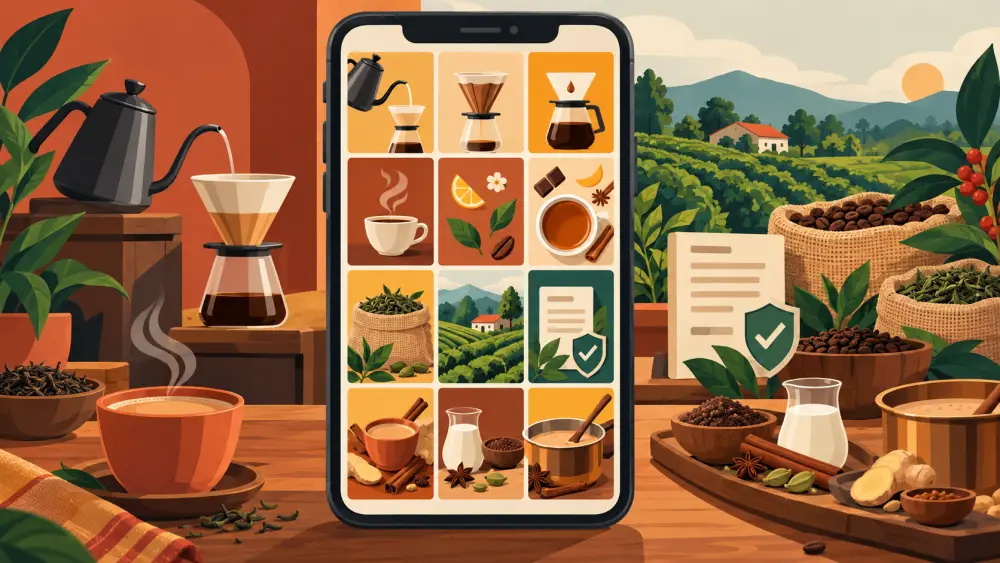
You cannot send aroma through a phone screen. What you can send is a method, a vocabulary and a story, and those are what make a stranger curious enough to try your blend. Here are four things a tea or coffee seller can post that do real work.
Brewing guides
The biggest worry for a first-time buyer is "will I make this properly". Calm that worry with a short brewing clip for each product.
Include the things people actually need:
- How much leaf or ground coffee for one cup, in spoons and in grams.
- Water temperature in words anyone can follow, such as "just off the boil".
- How long to steep or how long the pour should take.
- What to do if it tastes too bitter or too weak, as an easy adjustment.
Shoot from above, with the kettle, cup and spoon in frame. Use the method you really use at home, and say so. If you suggest more than one way to prepare it, such as filter or French press for coffee, make a clip for each, not one long confusing one.
Tasting notes
Tasting notes help people choose between products without tasting them. Describe what you actually notice, in everyday words: nutty, floral, smoky, sweet, sharp. Write them after a few tastings on different days, since mood changes impressions.
Add context for someone new. You might say that a particular tea works well as a morning cup, or that a coffee suits milk better than black. Keep these as your opinions, not rules.
A tip is to ask a few friends to try it and share their own words, then pick the most common descriptions. It stops the notes from sounding like marketing copy.
Sourcing stories
People like to know where a thing comes from, but this is where honesty matters most. Share only what you can document. If you buy from a particular estate, farm or supplier, you should have the paperwork or invoices to say so. If you buy from a trader and do not know the farm, say "sourced through a trader in" a region, or keep it simple and do not name an origin at all.
You can still tell a true story. Talk about how you found the supplier, what you looked for when you sampled, how you decide on a roast or a blend, and why you chose your pack sizes. Leave out health benefit claims, and avoid words like "pure", "organic" or "single origin" unless you can show proof.
Recipe posts
Recipes give existing customers a reason to keep coming back. Think of masala chai, iced tea, a simple cold coffee, a coffee with jaggery, or tea with lemon and honey on a rainy day. Show ingredients in one frame, the method in a few steps, and the finished cup.
Do not turn a recipe into a health pitch. A pleasant drink for an evening is enough. If you mention an ingredient such as ginger or tulsi, treat it as flavour, not as a remedy.
Make it easy to order
Each of these posts should lead to your store, where pack sizes, price per pack and grind options are clear. If you are setting up from scratch, see how to start selling tea online in India or how to start selling coffee online in India. To photograph the packs well, how to photograph packaged snacks and pickles has tips that apply to pouches and tins too.
Start this week with one brewing clip for your best-seller. Film it in your own kitchen, add a line about what to change if it comes out too strong, and put the recipe in the caption so people can save it.