
How to write a product title that people actually search for
A simple structure for product titles that tell a shopper what the item is, what it is made of and what makes it different, without promising any search ranking.
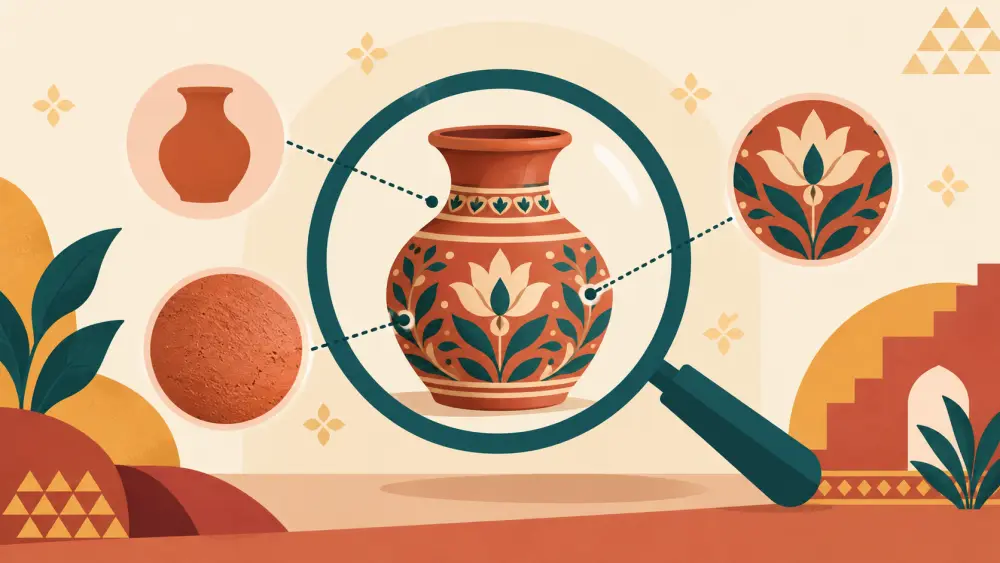
Think about how you would describe your product to a friend who has never seen it. You would not say "Aura". You would say "a cotton kurta, straight cut, with block print on the yoke". A good product title is that sentence, shortened. It tells a stranger what the thing is before they have looked at a single photo.
No title can guarantee that your product shows up first anywhere. What a clear title can do is make sure that when someone does land on your page, from Google, from a shared link or from your Instagram bio, they know within a second whether this is what they were looking for.
The four parts of a useful title
Most good titles are built from the same four pieces, in roughly this order:
- Product type: the plain noun a buyer would use. Kurta, tote bag, soy candle, hoop earrings.
- Material or key ingredient: cotton, brass, soy wax, vitamin C.
- Size, quantity or use: 250 ml, set of 3, office wear, for dry skin.
- One distinguishing detail: hand block printed, oxidised silver finish, lavender scent.
You do not need all four every time. A title with type plus one strong detail already beats a name that only you understand.
Put the noun early
Shoppers scan the start of a title first, and on a phone the end often gets cut off. Lead with what the product is. "Hand Block Printed Cotton Kurta" reads well; "Our Signature Summer Collection Piece No. 4" tells the reader nothing until they open the page.
Write the way people talk
Use the words your customers use in their messages to you. If buyers ask for a "tote", do not title it "carry-all accessory". If they say "diya", do not use only the formal name. Scroll through your own WhatsApp and Instagram DMs and note the exact words people type. Those are your keywords, and they cost nothing.
Keep your brand name out of the way
Your store name is already on every page. Repeating it at the start of each product title uses up your best space. If you want a signature collection name, put it after the descriptive part, for example "Cotton Kurta, Hand Block Printed - Meera Collection".
A quick before and after
Before: "Floral Dream". After: "Floral Print Cotton Kurta, Straight Cut". The second one can be understood by someone who found it through a shared link with no context at all.
Another: Before: "Glow Candle". After: "Lavender Soy Wax Candle, 180 g, Glass Jar". The weight and the container are details a buyer would otherwise have to message you about.
Where the title appears on your store
On a Varchas store, the name you type when you add a product is what shoppers see on product cards and at the top of the product page. The description field in the product editor is the place for fabric, fit, care and the story behind the piece, so you can keep the title short and let the description carry the rest. For more on that part, see writing product descriptions people read.
Test it on a stranger
Show your title, without the photo, to someone who does not know your brand. Ask what they think it is. If they get it wrong, rewrite it. If your catalogue is small, you can rewrite every title in an afternoon, which is one more reason to keep a smaller catalogue and give each product proper attention.