
How to avoid sending the wrong item or size
A wrong colour or size reaching a customer costs you a return, a reshipment and some goodwill, so here is a simple label check and a two-step verify habit you can run at your packing table.
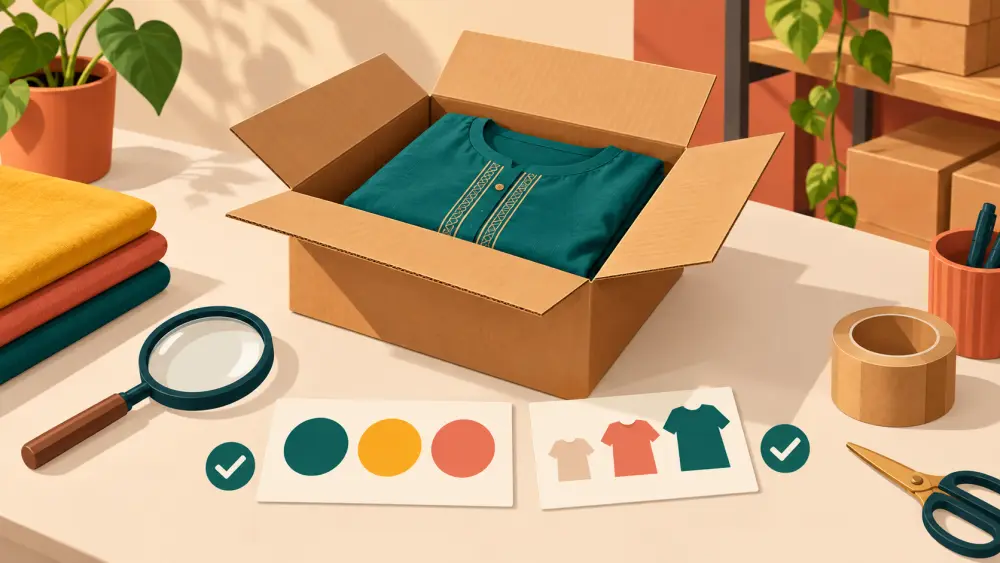
Few things feel worse than a customer opening a parcel and finding the wrong kurta size or the wrong scent. You pay for the original shipping, then the return, then the correct item going out again. Most of these mistakes are not carelessness. They happen when you pack fast, tired, and from memory. The fix is a small habit, not a new tool.
Why wrong-item mistakes happen
They usually come from three places. Similar-looking products sit next to each other on the shelf. Variant names are vague, so "Blue" could mean three different blues. And the order details are read once, quickly, from a phone screen while you are also answering a message.
Look at your own past mistakes before you change anything. If most errors are sizes, your size labels are the weak point. If they are colours, your naming is.
Label everything at the shelf, not at the table
The best place to prevent an error is where the stock lives. Give every product and variant a plain label on its bin, bag or shelf edge, with the same name and code you use in your catalogue. If you have not set up codes yet, set up SKU codes for a small store is a good place to begin.
- Write the size or colour in large letters, not just a code.
- Keep one variant per bin. Do not mix sizes in one pile "just for now".
- Put the label on the item or its inner pack too, so it stays identifiable once it leaves the shelf.
The two-step verify habit
Split packing into two separate looks, ideally with a short gap between them.
- Step one is picking. Read the order line by line, pick each item, and place it on the packing table. Say the item and variant aloud as you pick it.
- Step two is checking. Before you seal, read the order again from the top and compare it against what is physically in front of you. Check the product, the size or colour on the label, and the quantity.
The second read should be done as if you were a stranger checking someone else's work. If you are packing alone, do all your picking first, then take a breath and do all your checking.
Check the order before you pick
Some errors are not packing errors at all. The order itself might be unclear, such as a customer who messaged on WhatsApp and then changed the size. Before picking, confirm the final size and colour against the latest message. A quick note on the order saying "changed to M on Tuesday" saves a lot of confusion.
Match the parcel to the paperwork
Once packed, compare the outer label and the invoice or order slip against the order. The name, address and items should agree. A parcel with the right item and the wrong address label is just another version of the same mistake. If you often pack several orders at once, pack and label one parcel fully before starting the next, so slips never get crossed.
When a mistake still gets through
It will happen occasionally, however careful you are. Reply quickly, apologise once and plainly, and tell the customer what you will do. Offering to send the correct item right away, and arranging pickup of the wrong one, keeps trust intact. Read cancellations, refunds and restocking for how to handle the stock side afterwards.
Keep a tiny mistake log
Write down every wrong-item case in one line: date, what went out, what should have gone, and why you think it happened. After a month, patterns show up. Maybe two similar sizes always get swapped, so you move them to separate shelves. Maybe one product has confusing names, so you rename it. Fixing the cause once beats apologising every month.
Wrong-item errors are rarely about effort. They are about making the right action the easy one, with clear labels, two looks at every order, and a note when anything changes. Start with one change this week, such as labelling your bins, and add the second check when that feels natural.