
How big should a COD fee be on a small order?
A flat cash on delivery fee weighs very differently on a Rs 500 order and a Rs 1,000 order, and this example shows how to size one from handling and refusal risk.
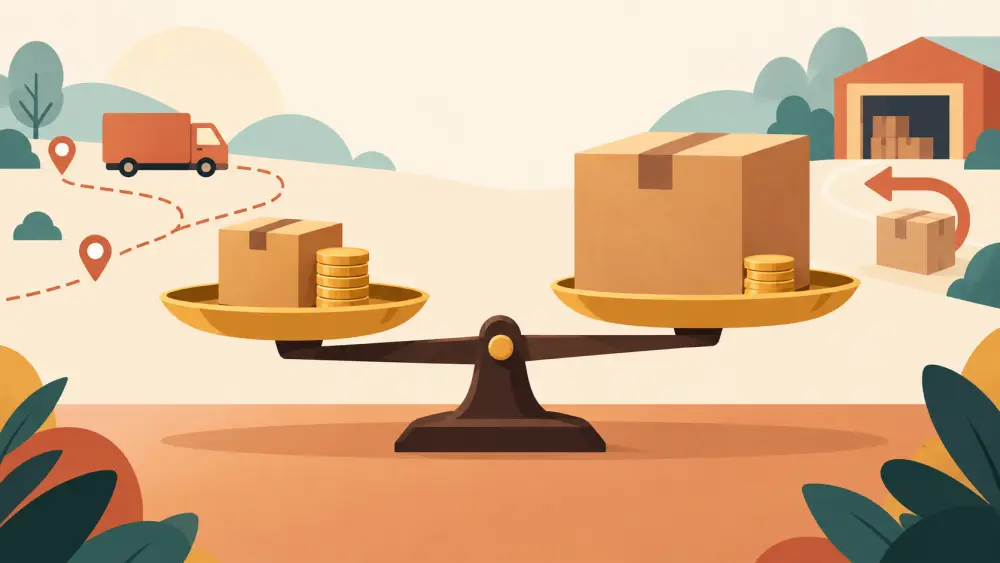
Many sellers add a small fee for cash on delivery orders. The reason is simple: COD costs more to handle and carries a risk that the parcel is refused at the door. The harder question is how big the fee should be, and how it feels to the buyer on a small basket.
The fee as a share of the order
A flat fee looks different depending on the order value. Take a Rs 40 fee:
- On a Rs 500 order, Rs 40 is 8 percent.
- On a Rs 1,000 order, Rs 40 is 4 percent.
A buyer with a Rs 500 basket sees a heavier surcharge than one with Rs 1,000, even though your cost to handle each is the same. That is why small orders can tip into abandonment when a COD fee appears.
Build the fee from your actual costs
Think of two components: handling and risk.
Handling. COD may need extra effort, such as confirmation calls, reconciliation of collected cash with the courier and delayed settlement. Say your handling costs Rs 30 per COD order. Use your own figure.
Refusal risk. If a share of COD parcels are refused, you pay shipping both ways and sometimes lose the product's resale value. Suppose a round trip costs you Rs 160, and 1 in 10 of your COD orders is refused. The expected cost spread over every COD order is Rs 160 divided by 10, which is Rs 16.
Add the two: Rs 30 plus Rs 16 is Rs 46. A fee near Rs 50 would cover it. At Rs 50, the fee is 10 percent of a Rs 500 order and 5 percent of a Rs 1,000 order.
These numbers are illustrative. Your refusal rate could be higher or lower. Track yours for a few months before setting the fee in stone, and read returns and RTO numbers for how to measure it.
Options other than one flat fee
- A flat fee for all COD orders, simple and easy to explain.
- A small percentage fee with a floor, so larger baskets contribute more.
- Free COD above a certain value, if your margin supports it.
- A discount for prepaid orders instead of a fee on COD. It can read as a reward rather than a penalty, though the money works out the same.
- Partial prepayment for risky pincodes or very high-value orders.
None is perfect. Pick the one your customers will understand without a phone call.
Do not drive COD customers away
In India, many first-time online buyers choose COD because they do not yet trust prepaying a new brand. A heavy fee can send them to a competitor. Our post on why COD is not going away explains how to live with it, and cash on delivery without the chaos covers the operational side.
Encourage prepaid gently
The less COD you handle, the less you need the fee. Offer UPI at checkout, show it prominently, and consider a small incentive. For how payment choices fit together, see UPI and COD payments for your own store.
The takeaway
Size your COD fee from real handling cost plus expected refusal loss. Check what percentage it is of your usual order value, and watch whether small baskets drop off after you introduce it. If they do, shrink the fee or shift to a prepaid incentive. The right number is the lowest one that stops COD from costing you money.